East to West in ‘The Duchess’ (E467) across The Nullarbor Plain

|

|
|
Steve Butler’s Diary on his drive across the Nullarbor Plain in November 2022. Read the story here:
|

| ||
OE127: New Zealand
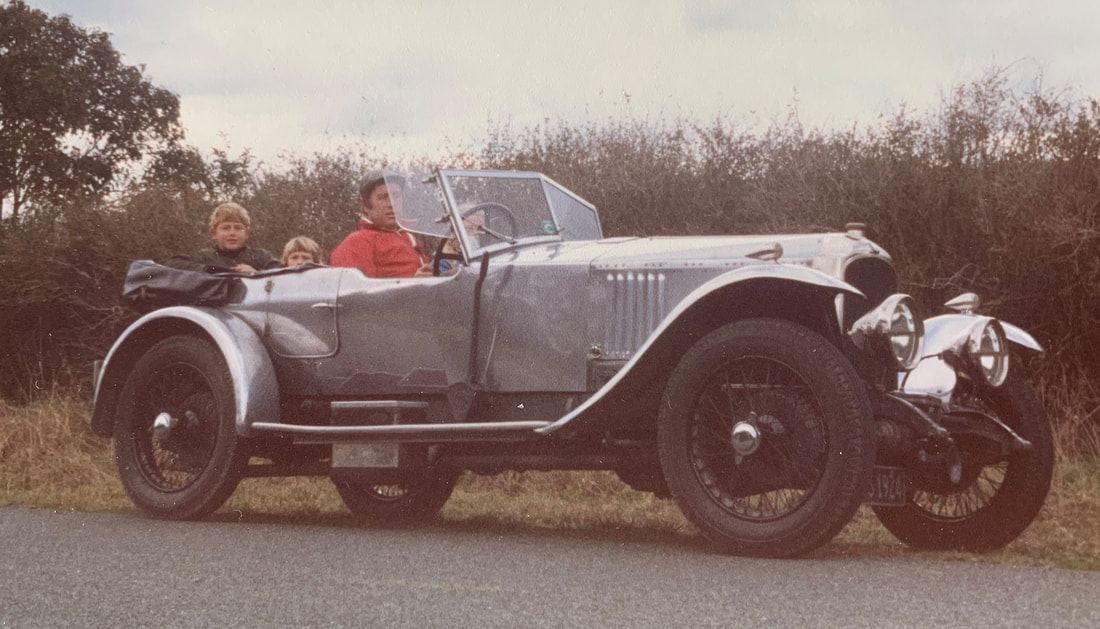
Believed to be the only 30-98 delivered new to New Zealand, and still residing there today. More here.
OE127
E383
There are relatively few E types with a well documented photographic history. E383 is a happy exception. John Newens has kindly provided these superb images of the car, documenting its history from the 1930s, through to the present day. John continues the story:
"E383 was registered on 9th July 1922 (8 days after my Father!). The first two owners are unknown, but fortunately I was contacted by Peter Shepherd, the son of the third owner, in the ‘90s & I was able to take him for a run (that’s him in the picture as a boy). G. Shepherd owned the car from the early '30s until 1946 when it was sold to Axel-Berg, in immaculate original condition, for £30.
A-B competed at Prescott in 1946, Brighton Speed Trials & other events. During a bit of a dice with a Lagonda he had the misfortune to hit a bridge parapet in Cullompton, after which the car got re-modelled with a Delage axle, outside exhaust, & cycle wings in the manner of the time.
It was offered for sale again in June 1950 for £250. After that it went to a Mr Thorpe in 1951, & then J. Radford in 1952. In 1955 it was bought by the Committee of the VSCC & presented to Tim Carson. (secretary) in appreciation of his hard work. Tim put it back to more or less its original appearance. In 1959 it went to David Howard (dealer) who kept it for a few years, & in 1965 it was sold through Danny Margulies (dealer) to our dentist Mr Livingstone.
At that time my Dad owned a rather smart 3 litre Bentley & the Vauxhall was in need of some serious TLC! So, as our dentist had taken rather a shine to the 3 litre, a straight swap was arranged - what a great deal! Shortly after this I managed to persuade my Father to send the chassis up to Arthur Archer, who completed a comprehensive mechanical re-build to original spec. replacing the tractor clutch & and refitting a brakeless front axle (provided by John Rowley), and also Derihon shock absorbers (1970/80).
In the early 80s my Father generously passed the re-built chassis to me & I completed the restoration in 1983, since when Gill & I have done many thousands of miles in UK & Europe ...... only once failing to return under our own power'.
E383 Register Notes: Velox body - blue with aluminum bonnet; OS spare; car is original including b.e wheels and all fittings; rebuilt 1983; raced in late '40s and early '50s by Axel Berg; steering box replace with another E-type box by Berg following accident in 1950s; original engine /chassis/ body combination; front axle replaced with Delage 1946 and back to brake-less E- Type 1970s ex Rowley; Hèle Shaw clutch retained; mechanical rebuild A.Archer 1970-1980 mudguards replaced , bodywork restored; restoration completed 1983 and in regular use ever since; valves and guides replaced and clutch re built early 2000.
"E383 was registered on 9th July 1922 (8 days after my Father!). The first two owners are unknown, but fortunately I was contacted by Peter Shepherd, the son of the third owner, in the ‘90s & I was able to take him for a run (that’s him in the picture as a boy). G. Shepherd owned the car from the early '30s until 1946 when it was sold to Axel-Berg, in immaculate original condition, for £30.
A-B competed at Prescott in 1946, Brighton Speed Trials & other events. During a bit of a dice with a Lagonda he had the misfortune to hit a bridge parapet in Cullompton, after which the car got re-modelled with a Delage axle, outside exhaust, & cycle wings in the manner of the time.
It was offered for sale again in June 1950 for £250. After that it went to a Mr Thorpe in 1951, & then J. Radford in 1952. In 1955 it was bought by the Committee of the VSCC & presented to Tim Carson. (secretary) in appreciation of his hard work. Tim put it back to more or less its original appearance. In 1959 it went to David Howard (dealer) who kept it for a few years, & in 1965 it was sold through Danny Margulies (dealer) to our dentist Mr Livingstone.
At that time my Dad owned a rather smart 3 litre Bentley & the Vauxhall was in need of some serious TLC! So, as our dentist had taken rather a shine to the 3 litre, a straight swap was arranged - what a great deal! Shortly after this I managed to persuade my Father to send the chassis up to Arthur Archer, who completed a comprehensive mechanical re-build to original spec. replacing the tractor clutch & and refitting a brakeless front axle (provided by John Rowley), and also Derihon shock absorbers (1970/80).
In the early 80s my Father generously passed the re-built chassis to me & I completed the restoration in 1983, since when Gill & I have done many thousands of miles in UK & Europe ...... only once failing to return under our own power'.
E383 Register Notes: Velox body - blue with aluminum bonnet; OS spare; car is original including b.e wheels and all fittings; rebuilt 1983; raced in late '40s and early '50s by Axel Berg; steering box replace with another E-type box by Berg following accident in 1950s; original engine /chassis/ body combination; front axle replaced with Delage 1946 and back to brake-less E- Type 1970s ex Rowley; Hèle Shaw clutch retained; mechanical rebuild A.Archer 1970-1980 mudguards replaced , bodywork restored; restoration completed 1983 and in regular use ever since; valves and guides replaced and clutch re built early 2000.
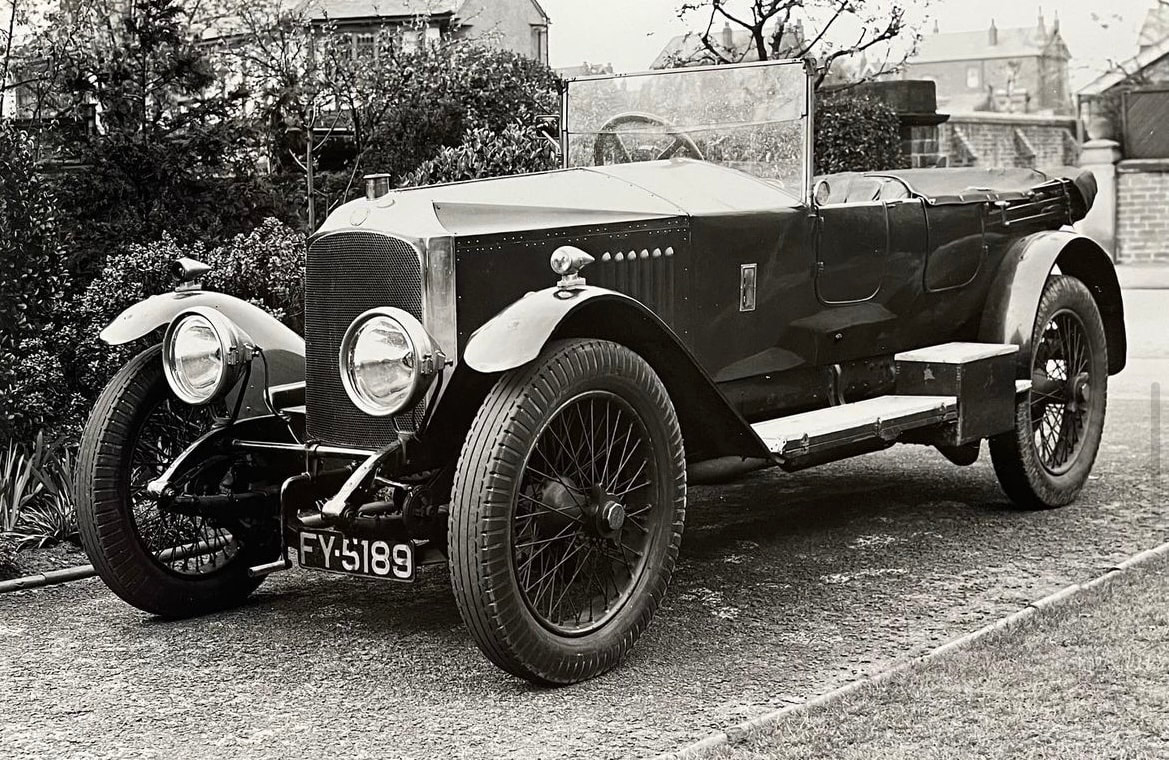
E383 (c.1940)
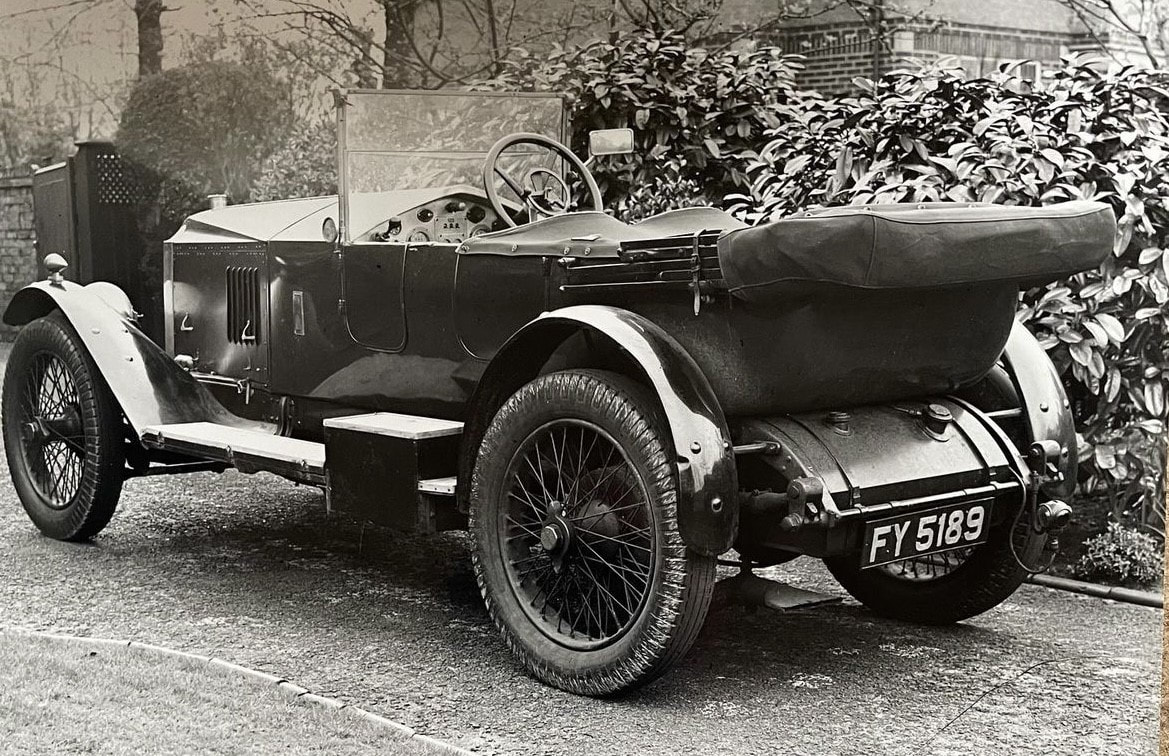
E383 (c.1940)
|
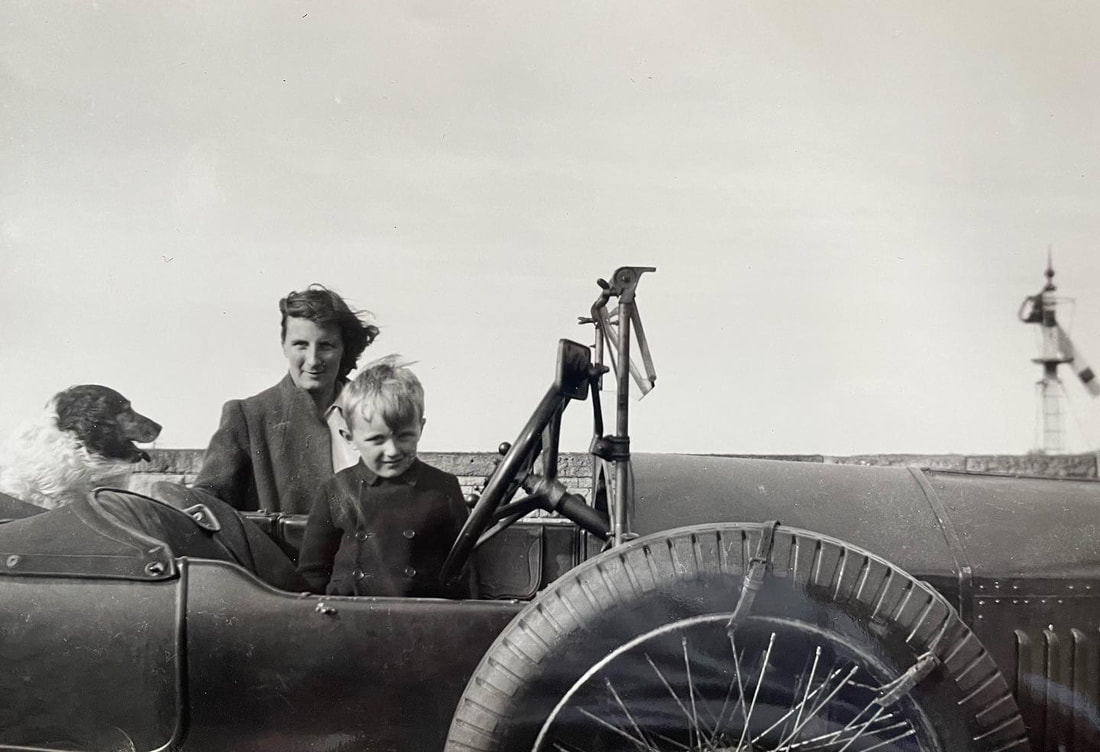
E383 (Shepherd 1930s)
|
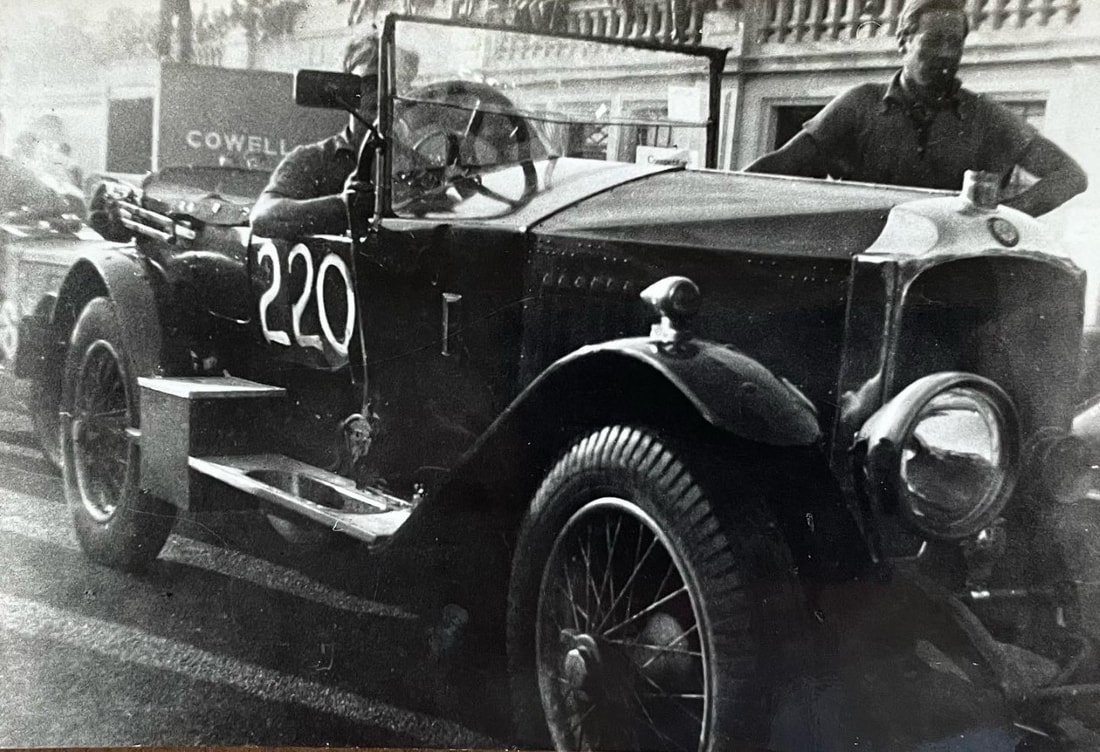
E383 (Axel-Berg 1946 Brighton Speed Trials)
|
Brighton Speed Trials 1946
|
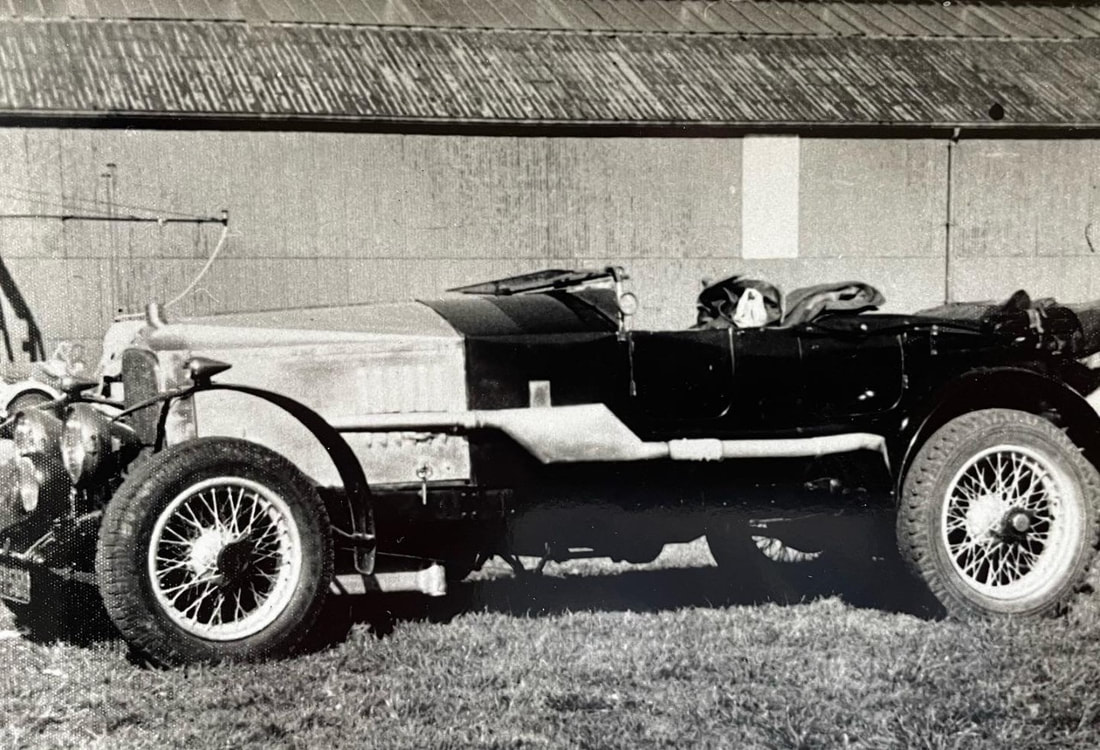
E383 (Axel-Berg 1940s)
|
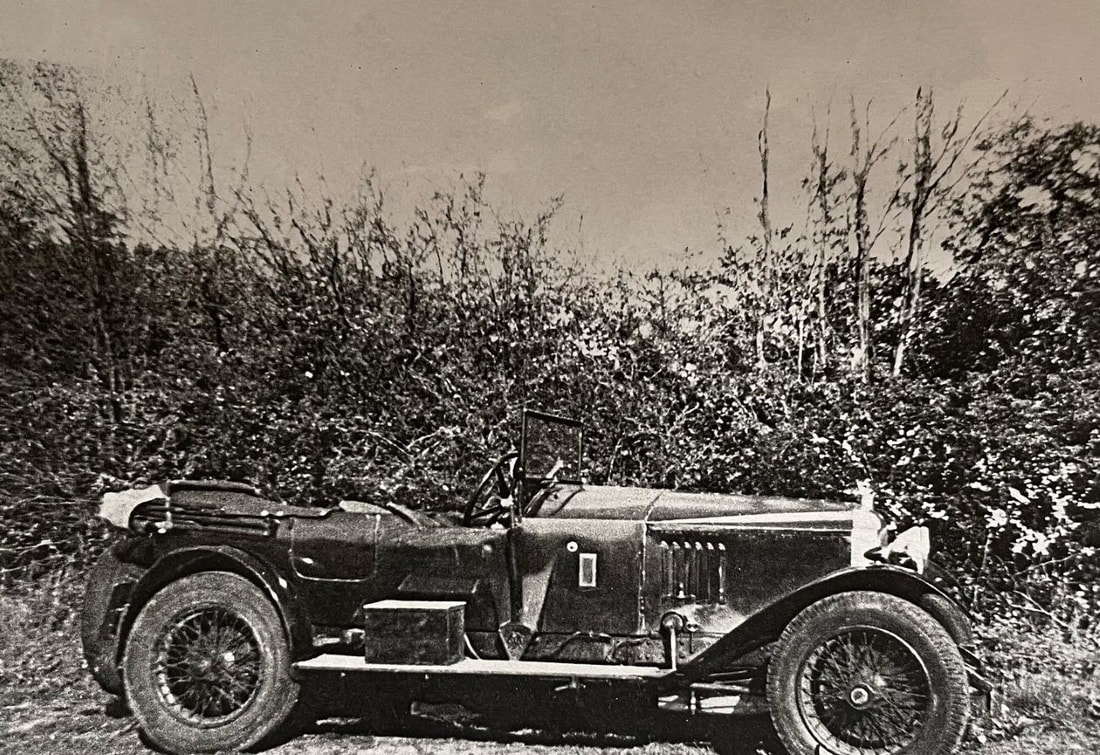
E383 (Carson 1950s)
|
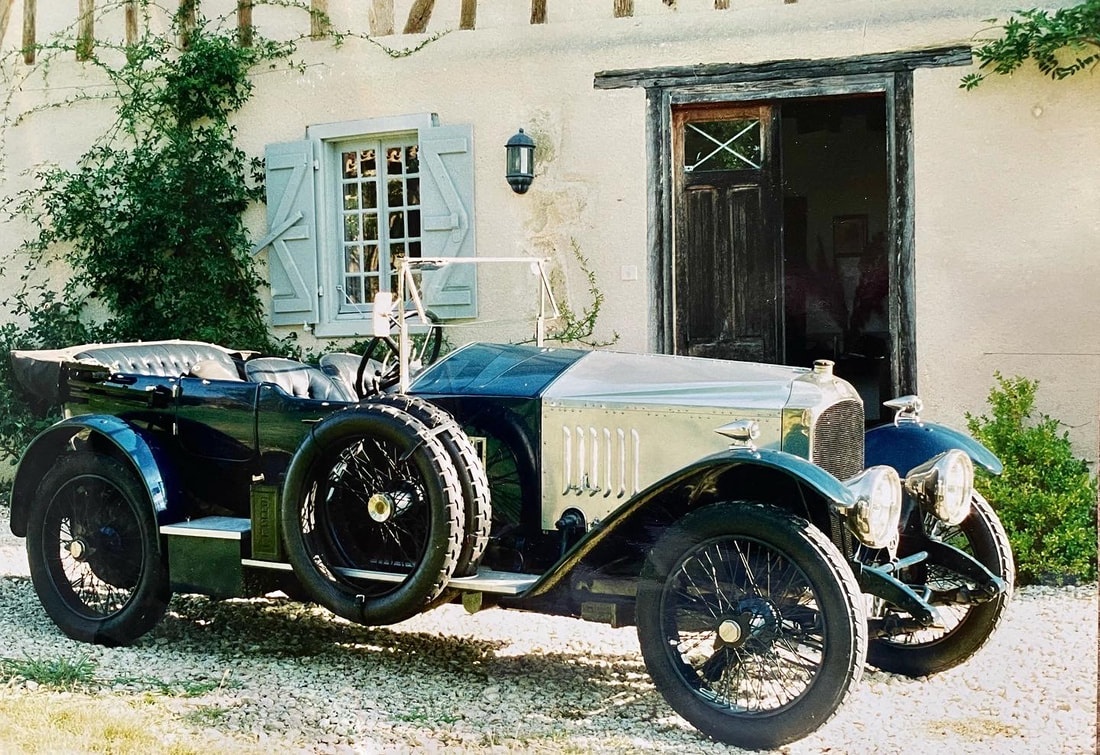
E383 (current)
Those "Yes' moments.....E267
By Steve Butler
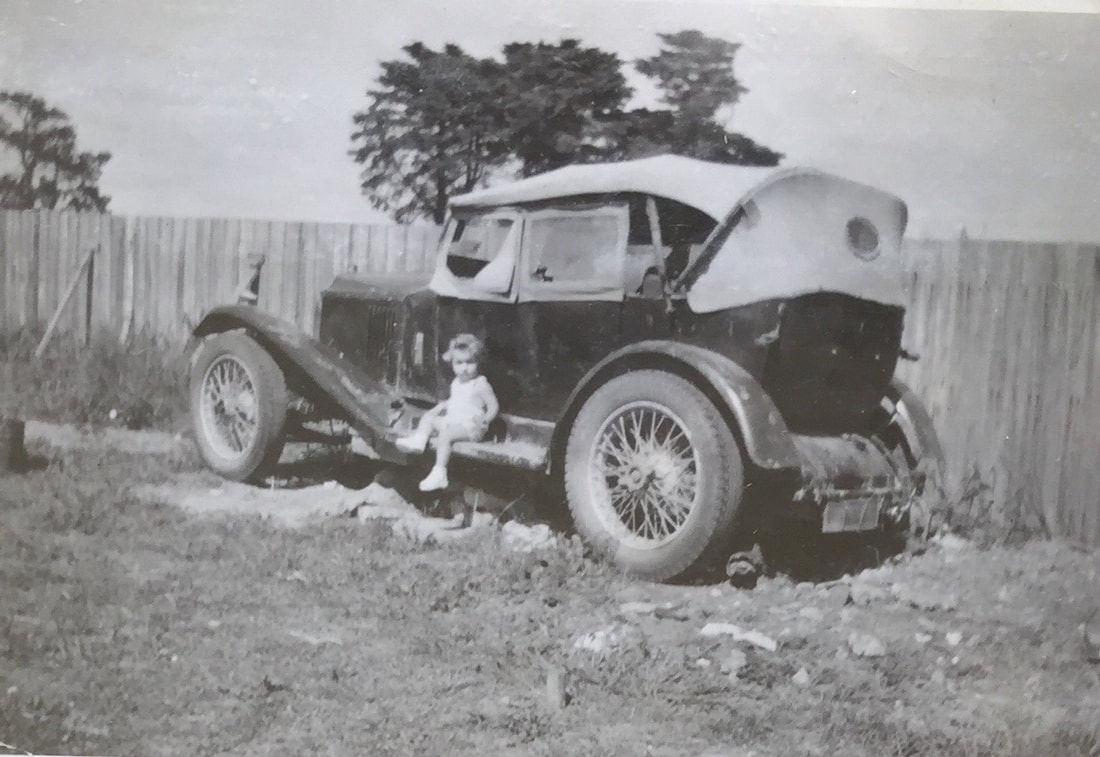
Early 1960s
|
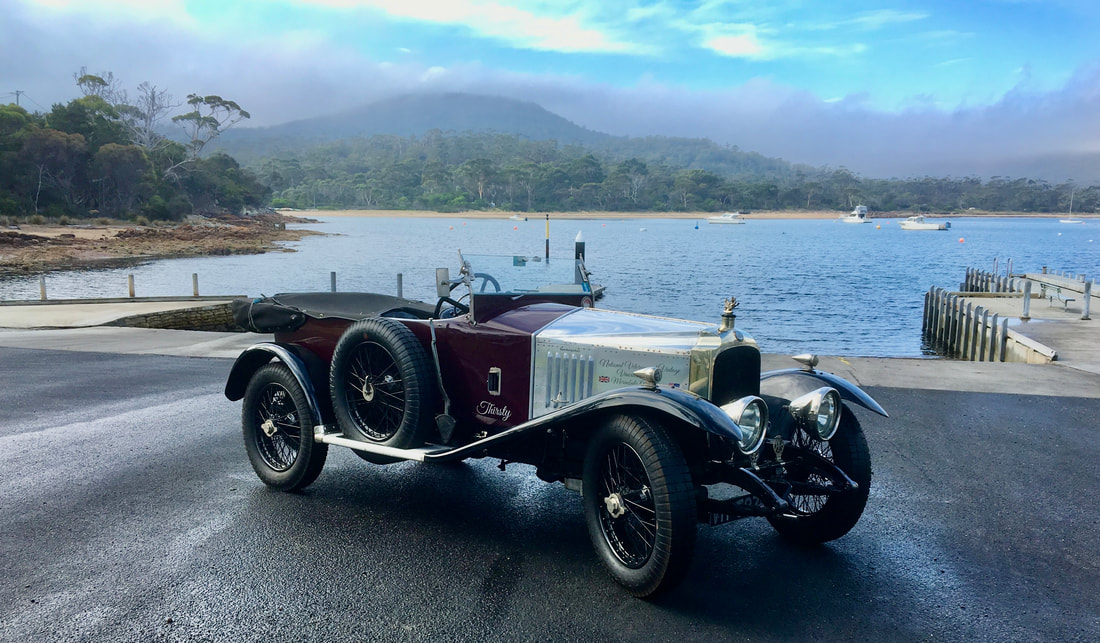
Return to Tassie 2019
|
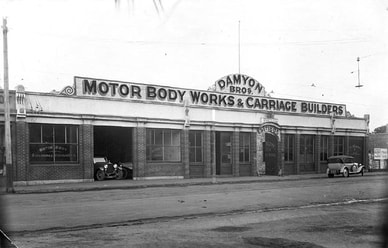
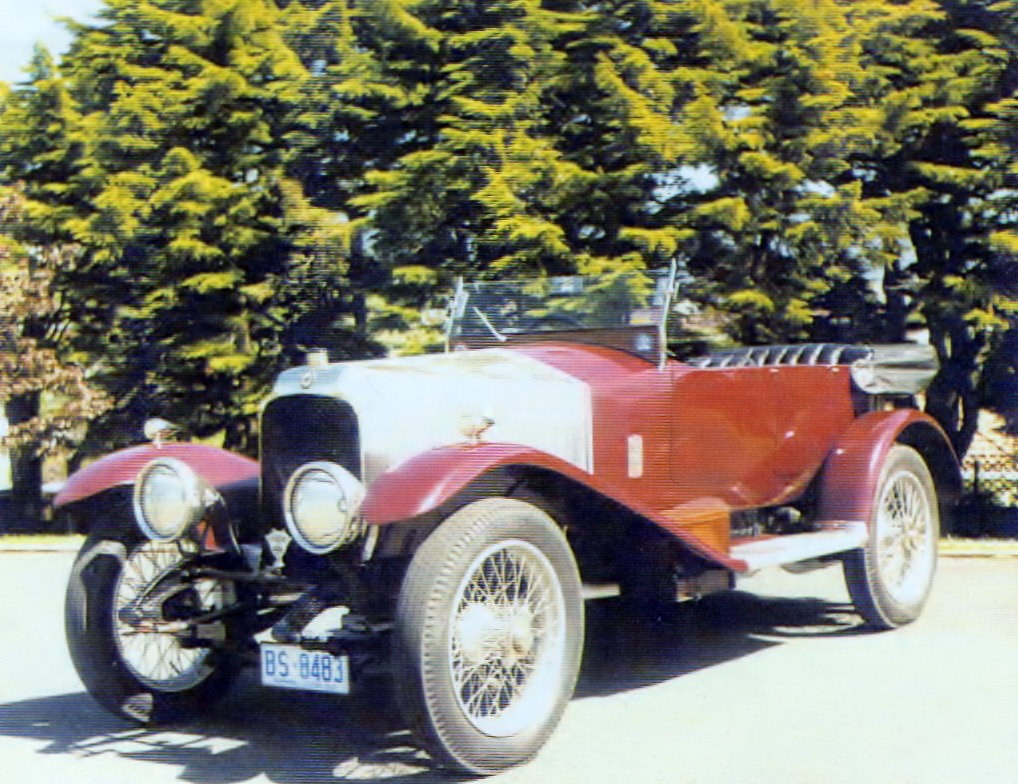
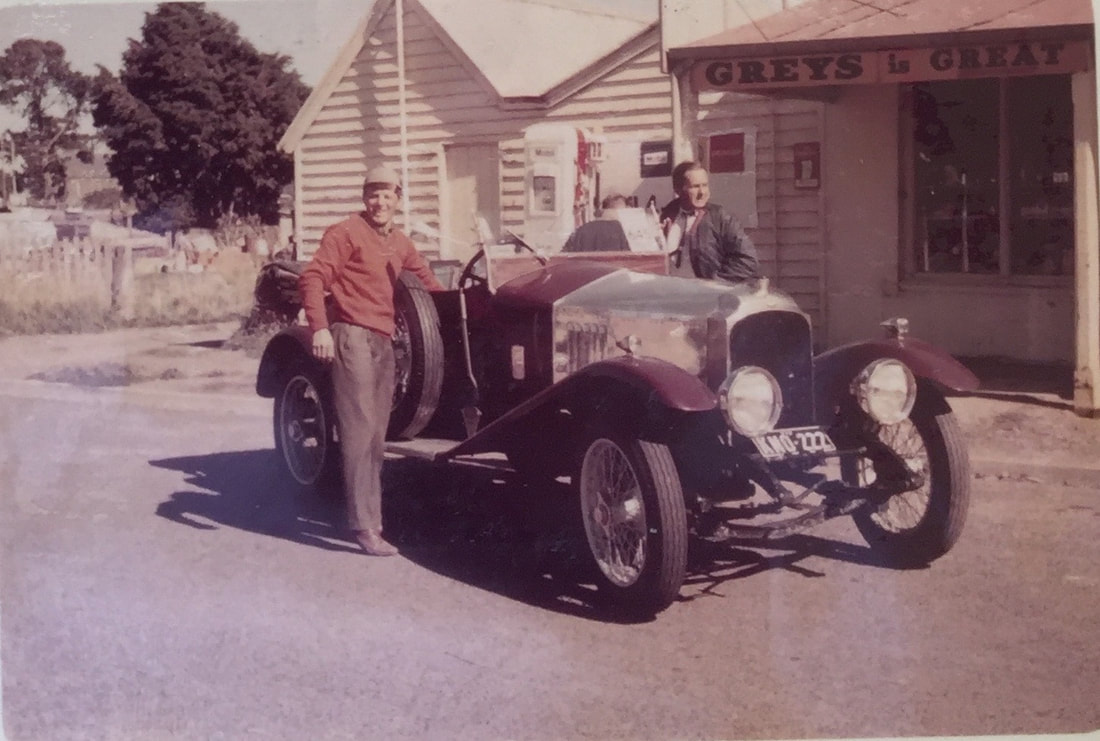
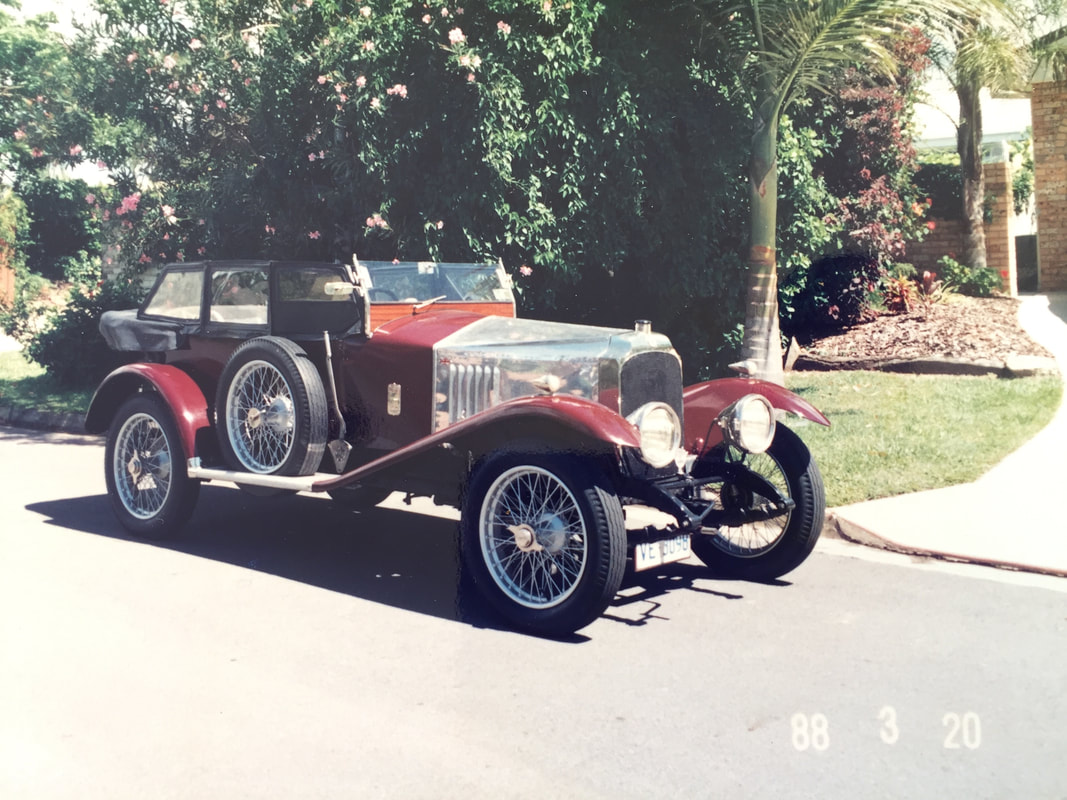
After buying the car in 2015, I soon became obsessed with trying to uncover its Australian ownership history. I knew that it had been shipped to Australia in 1920 and bodied at Damyon Bros (Bishop family) on Carlisle Street in St Kilda. I also knew from the records that Ron Gaudion, a Jaguar D Type race team engineer from the 1950’s, had bought the car as a barn find from a tobacco farm in the Alpine Region of Victoria in 1959. He had heard about the car whilst staying in Myrtleford one night during his years working for BP as an area engineer. He was the car’s saviour because he did a full restoration, and there car was finally re-registered in 1970. He owned the car for 29 years before selling it to a buyer from the UK, and it was shipped back to England in 1988.
I googled Ron Gaudion and discovered a wealth of information about his time working on the development of the Jaguar D type race cars at Jaguar, and then being transferred to the Ecurie Ecosse race team as a young Australian seeking to widen his motor engineering experience . He is now the sole survivor of the Ecurie Ecosse team, so has enjoyed a few years in the limelight due to the D Type wins in the mid 1950’s, and in particular at the Le Mans 24hr race wins of 1955 by Jaguar works team and then in '56 and '57 by Ecurie Ecosse, taking the trophy away from Ferrari for those 3 years.
He is 90 years old now and still fit as a fiddle. He retired to the Gold Coast with his Scottish wife May, who he met in 1955 whilst working at the Ecurie Ecosse Glasgow garage for owner David Murray.
I spent my first English winter of 30-98 ownership trying to research the names of any other Australians associated with the car. This was a slow and very time consuming process, trawling through the Trove internet records of the National Library of Australia and subscribing to Ancestry.com. to go through Electoral lists, Births, deaths and marriages, ship passenger manifests and the like. I often startled myself when I realised it was 1am in the morning and I was still glued to the computer screen knowing that I had to be at a work the next morning. That said, I really enjoyed doing it .
I managed to get in touch with Ron Gaudion by contacting the Jaguar Club of Queensland, where he is Patron, and it was relatively easy to find stuff about Ron on the internet. Phil Virgona had also contacted me (through Bonhams) to see if I had any information on another Vauxhall that he was restoring and that Ron had owned. I exchanged what little I had on his car and Phil kindly sent me a bunch of Griffin Newsletters from the early 1970’s. They make interesting reading and both Peter Latreille, Glyn Farrell and John Dymond are named in dispatches. By then, I had made contact and was exchanging emails with Ron about my car. Ron had bought the car in 1959 from Jim Calvert for £50. Jim and his brother, Bill Calvert, were farmers in Dandongadale, near Myrtleford (Vic), but Ron had no names or dates of previous owners. As Ron said, ‘In those days, no one was interested in a car’s ownership history’ .
Eventually, I decided that if I was going to make any more progress finding the Calverts or any other previous owners, I would have to go to Australia and hope that by meeting a few people out there it would help my research. Nic Portway and David Marsh (in the uk) had kindly given me some email addresses and so I was able to make contact with the likes of Justin Coxhead, John Kent, Peter Latreille, Graeme Stortford and John Floyd.
I had last been to Australia in 1986 and at that time Pommy bashing was still the popular way of 'helping' visitors from the mother country so I recall that on leaving Australia, I thought to myself that I probably wouldn’t bother coming back anytime soon. So you can imagine the delight when I came back to Australia (almost 31 years later) in Feb 2017 to such a warm and friendly country that has clearly prospered and firmly established its identity and now has little interest in Pommy bashing !
I flew into Melbourne and was excited at the prospect of meeting the people I had been corresponding with by email. I didn’t have to wait long. 20 mins after checking into my CBD hotel (0900 hrs) Peter Latreille turned up in his 30-98 and whisked me away for the rest of the day (until 1800 hrs in fact) when I had to politely decline supper from wife Anne, in order to retreat to my hotel and sleep off some jet lag. During the day he showed me his extensive library and the records he had on all the 30-98 Vauxhalls. I told him what I had discovered so far, so he added the information to his scriptures then aptly named the file ‘The Dandongadale E Type’. He also gave me copies of the first two issues of the Australian 30-98 Register Newsletters from 1976 and 1977 (a newsletter that he had initiated) and I was pleased to see that Ron Gaudion and my car featured in the some of the reports and activities at that time.
The next day I went into Melbourne library and followed up some stuff on the Syme family ('The Age' newspaper) because there had been a note in the car file that the car’s first owner could have been one of the owner’s five sons . I had eliminated Sir Geoffrey and Oswald that worked at the newspaper and who were well known for owning and hill climbing both Mercedes and Bentley cars but another brother, George Francis Syme became a Grazier so I focused on him. He had an apartment at the The Grand Hotel in Melbourne (now The Hotel Windsor ) so I fantasied how he probably used the Vauxhall to drive from his farm to Melbourne. However, some further enquiries led me nowhere so I gave up on the Syme connection and decided to carry on researching from the last known owners.
Whilst researching from the UK, I had come across the AOMC and the service they provide for old car owners in Victoria so, whilst I was in Melbourne, I met up with Philip Johnston in his home town of Mt Waverley. He is a researcher for AOMC and before my visit I had engaged them to trawl through the microfiche (they rescued from VicRoads) to try & find details about my car. John Kent had given me a few Reg numbers from the 1920-30 era to look into so I passed those to Philip, who had been given my assignment. When I had first contacted John Kent by email from the UK, he told me that he thought my car had belonged to the Williams brothers but that was a new name to me so I just made a note of it and John had no other information. I didn’t have any definite registration numbers before 1959 which didn’t help matters either. I had previously thought that all the old Vic records had been by engine number but from what I’ve seen, they are by Reg number and maker’s name.
Whilst Philip said he thought it would be a waste of time going to see VicRoads at Kew, I went to see them anyway and had no difficulty in talking to someone about old car registrations. I gave them the list of pre 1940 reg numbers that John Kent had sent me and they later emailed me with a very poor copy of a re-registration document stating that the car had been weighed at Bouverie Street Weighbridge. The car in question had weighed in at 1ton 9 cwt and attracted a road tax of £8-14 shillings and that’s pretty much all that was legible. I had previously thought that VicRoads had no old records and the AOMC had the only ones that were still available, but it seems that might not be entirely true. I had to pay them a small admin fee for searching for me but they offered to pay it back when the search only revealed the 95% illegible document. I later sent it to someone for a forensic test but that was unsuccessful.
Whilst in Melbourne I visited the Damyon Bros body shop on Carlisle Street in St Kilda where the car had been bodied in late 1920 or 1921. It’s a heritage building now occupied by Salvo and the building is pretty much unchanged from that time, so easily recognisable. I also found a black & white picture of the works taken in 1920 in Melbourne Library archives, so that was a result.
Last but not least, Graham Steinfort kindly received me at his home to trawl through a bunch of early VSCC (Vic) Newsletters from 1945 . It was interesting to read the names of early club members and what they were doing but it didn’t throw up any clues to get me any further back in time than the Calvert owners in the 1950’s. George Coxhead (Justin’s father) and the Williams brothers were both names that were in evidence at the VSCC in 1945.
After 5 days in Melbourne, I rented a car and headed up country to Bright where Justin Coxhead & Anne insisted I stay with them. We had never met but been emailing each other and like everyone I have met on all my recent visits to Australia, they made me extremely welcome .
Justin drove me up the Buffalo River Valley to find Dandongadale but all that is left of the settlement now is just a couple of road signs because in the 1960’s the land was compulsorily purchased by the government with a plan to dam and flood the valley to make a new reservoir. However, the 2nd phase of the work was never started so what had been the settlement of Dandongadale, including the Calverts land and other valley farmers, was never flooded so the compulsory evictions had been unnecessary.
Justin knew that Adrian Smith, a local tyre garage owner, somehow knew of Jim and Bill Calvert’s farm at Dandongadale so we went to see him at his garage in Bright. Turns out that when Adrian was a child he went to the Calverts farm for piano lessons with Jim Calverts wife . He told us how he used to play in the old car whilst he was waiting for his sisters lesson to finish because by the late 1950’s it had been consigned to the barn and wasn’t being used by the Calverts.
We next headed for Myrtleford Library where we explained to the librarian that we were trying to find out anything about the Calvert family who farmed up the Buffalo river in Dandongadale. She sat us both down at a table and brought a stack of local history books so we took half each and started to flick through them . I think we had only been there about 20 mins when I came across a local book which included a section on the Buffalo River valley farmers. This listed the names of the Calverts and all their children.
‘YES!’ broke the library silence. What an exciting and satisfying moment it was for me.
The librarian kindly photo copied the chapter in question whilst we checked the rest of the books for any more information. It said that Bill and Jim Calvert had 6 children between them . Jim had 3 daughters and Bill had 2 sons and a daughter . They weren’t all born in Dandongadale because after the compulsory purchase in the 1960’s they moved to a sheep farm in NSW.
Later that day, Justin had a call from Adrian Smith who had managed to get a QLD tele number for Hal Calvert (Bill’s youngest son) and a few other bits of information on the Calvert family so things were hotting up at last.
I remember making the call to Hal Calvert from Justin’s kitchen. It was one of those calls when it starts off with the recipient thinking you are a nuisance caller but turns to joy when that person realises it’s a genuine call with some new and exciting historical information about their family. Neither Hal, nor his brother Dan, were born when their parents lived at Dandongadale but they had heard fond memories of ‘Thirsty’ from their Dad. It transpired that Bill Calvert (their father) had only recently passed away, so they were still dealing with their loss.
It didn’t take long before all six Calvert children were plugged into the email thread that was being passed around about their dad’s old car. Hal and Dan were the only 2 sons so understandably, took most interest in the car. However, it was one of their older sisters that came up with the name of Geoff Copland being the previous owner of the car, because she had been born on the farm and remembered it from childhood days.
Geoff was a dairy farmer in the Rose River valley, not far from the Calverts farm in Dandongadale but no one knew much about him. He had long gone from the farm and it was thought had moved to the Gold Coast where his partner worked at one of the hospitals. I think at that time he was a somewhat reclusive person but Jim Calvert’s wife was a piano teacher and she would go to Geoff’s farm to play duets with him on his Steinway grand piano. I later discovered that the piano had been left to Geoff in the will of a lady called Peggy Brown in Knightsbridge who supplied pastries and pies to Winston Churchill’s office during WW2........ but that’s another story !
The Calvert children told me that their respective dad’s were very keen cricketers, having been coached by their father. They gave me a couple of other players names from the local team and I got the phone number of one of them, Wally Mitchell in Myrtleford so went to see him and his wife, Shirley. He told me how they all went to matches in Thirsty and that their team were unbeaten for a number of years when the Calverts were playing. He said you could hear Thirsty coming from miles away and there was no other car like it in those days and they called it ‘Thirsty’ because it was often seen parked outside a pub. He kindly gave me a picture of all the Cricket team which included Jim and Bill Calvert. They were young men back then of course but it was the first picture I had seen of them and it made me feel good that I made some progress with Thirsty’s previous owners.
When I got back to Blighty, I set to work trying to find out something about Geoff Copland, although no one back in Australia knew if it was spelt with an ‘e’ - as in Copeland or without, as in Copland. I googled both versions and checked on Trove. Trove had an article from The Age on a Melbourne classical music concert by Melbourne University Conservatorium held in Dec 1935 and again in July 1937 and a Geoff Copland was listed as....... ‘an up and coming concert pianist’.
Bearing in mind I had found out that there was a grand piano in his small farmhouse up the Rose River, I thought to myself that this was just too much of a co-incidence and was excited that this could possibly be the Copland I was looking for . So what next ? I thought I would try and build his family tree using ancestry.com. That proved more difficult than I thought and at one point I had spent hours putting together a tree only to find out (through another Ancestry subscriber) that my Copland was not the one I was looking for .
Anyway, I stuck at it and eventually put his family tree together. I also found a WW2 service record and another article about a Geoff Copland who had been the only Australian officer on board HMS Indomitable when her Fleet Air Arm aircraft attacked Sumatra and also when she experienced the first Kamikaze attack from a Japanese fighter plane. He was also the first member of the RANR to be posted to a British warship.
According to his Military Record that I found on Trove, his next of kin was listed as Jeannie Copland (his mother’s name) and as I had already established that his father had died when he was 5 years old it just had to be the person I was looking for.
Geoff was born in 1918 and had an elder brother and sister. His father died in 1923, when he was only 5 years old, so his mother had brought him up. I noticed from the family tree (I had created) that his elder brother had been a Doctor and it’s often the case that one of the children carries on the family tradition. With that in mind, I made a decision to research his brother’s life rather than Geoff’s or his sisters . Also, it’s easier to find information on doctors than it is ordinary citizens, especially in Australia due to privacy laws. It’s also very difficult to trace family trees where there are only daughters because of the changes from maiden to marriage names.
I googled doctors in Victoria and there was only one Copeland MD listed so I called him on the phone and a man answered ‘John Copland speaking’ . Not surprisingly, the initial reaction of the receiver is that this is a hoax call and from overseas at that. However, once I had his attention by asking if he had an uncle called Geoff he was all ears. ‘YES!’ I had the right family. It was a Friday night in Melbourne and Dr Copland quickly explained that he was going out with his wife and would have to continue this conversation another time, but when I asked him just one question about Geoff, he said ‘Look, I will give you Geoff’s phone number and you can ask him yourself’. I was gob smacked knowing that Geoff would have been aged 99 and I didn’t expect him to still be around, let alone being given his phone number !
Before Dr Copland hung up, I couldn’t resist asking him if it was true that Geoff had a Steinway grand piano at his small farmhouse on the Rose River because it seemed a tad unusual to say the least. ‘Yes, it was’ he said. ‘In fact, I’m leaning on it right now in our sitting room in Frankston, but that’s another story and I haven’t got time to tell you now . You can ask Geoff all about it !’
With that I was left holding the phone and thought to myself ‘No time like the present, I’ve got Geoff’s tele number so will give him a call’. I can’t tell you how excited I was at this point in time .
I was probably on the phone for an hour whilst 99 year old Geoff recalled all he could and answer as many of my questions as he could. Turns out he did a music degree at Melbourne University and in 1942 was conscripted into the army where he met and befriended Peter Williams from Armadale. (I later discovered that Peter was the founding member of the VSCC Vic branch, in 1945). Geoff had been a keen sailor and generally liked anything to do with boats and the water so after basic training, he managed to get transferred to the RANR where he was commissioned. I think Peter Williams was sent to complete his Medical studies after basic training but during their lasting friendship, Peter introduced Geoff to his younger brothers Graeme and Ian, so they all became friends.
In 1946 Geoff returned from the Navy and bought the farmland up the Rose River. He needed a car to get around, so Graeme sold him his E-Type. All three of the Williams brothers were renowned local car enthusiasts. Sadly, Ian died in Tasmania in 1947 when his car overturned on a road down there.
In 1944 Peter Williams was one of the founding members of the VSCC of Australia and a year later (April 1945) was the Founder member of the Victorian branch and the first club meetings were held at the William’s family home at 39 Orrong Road in Armidale. Graeme became the first treasurer, so is indirectly related to Peter Holbeach. The house is still there so perhaps members of the VSCC should pay homage sometime and delight (or otherwise) the current owners. Just an idea.
Geoff only kept the ex Williams E-Type for 4 years before selling it to the Calvert brothers in 1950. It seems that when Graeme turned up at Geoff’s farm a few years later in a 2 seater OE, Geoff just couldn’t resist buying it from him, so sold the E-Type to the Calverts . He has a picture of the OE outside his Rose River farm and admits it was his dream car and he preferred it to the E-Type.
Mike Bellair kindly published an email I wrote to him asking for any help on the history of my car in the Nov 2016 Newsletter of the VSCC (Vic Branch) and asking if any members recognised the picture of it. I only had one response and that was from the wife of Earl Davy-Milne. She said that Earl recognised it as Graeme Williams E-Type from the 1940’s - exactly the same name that John Kent had given me the month before. It was only later when Geoff Copland told me he bought it from Graeme Williams that I found out the pivotal role that the Williams Bros had played in the formation of the VSCC. So both Earl and John were spot on with their historical information.
That’s as far as I have got with the car’s history. It’s been hard work just getting 2 more owners but I have enjoyed the journey and the satisfaction it has given me and others connected with the car, especially when I surprised both Ron Gaudion and Geoff Copland by turning up at their homes in it. You can imagine the look on their faces. I also visited both Bill Calvert’s sons. Dan lives in Armidale NSW, and Hal in Tweed Heads QLD, plus Bill’s daughter Moya, who lives near Brisbane. It was a very emotional experience for them both seeing their Dad’s old car for the first time.
I haven’t done any more research on the ownership history for about the last 18 months, but I will get back to it and I hope I can find some of William’s grandchildren who might have some family photos or history stashed away, that might just just lead me to the previous owner in the 1930’s. Who knows ? One things for sure, you won’t find out if you don’t try and the ‘YES!’ moments are well worth the effort, believe me . So if you’ve ever fancied going back in time, I recommend that you have a go. You won't be disappointed and it will give you something to do during the long winter nights. So get on it......!
Steve Butler
Status: Dec 2019
I googled Ron Gaudion and discovered a wealth of information about his time working on the development of the Jaguar D type race cars at Jaguar, and then being transferred to the Ecurie Ecosse race team as a young Australian seeking to widen his motor engineering experience . He is now the sole survivor of the Ecurie Ecosse team, so has enjoyed a few years in the limelight due to the D Type wins in the mid 1950’s, and in particular at the Le Mans 24hr race wins of 1955 by Jaguar works team and then in '56 and '57 by Ecurie Ecosse, taking the trophy away from Ferrari for those 3 years.
He is 90 years old now and still fit as a fiddle. He retired to the Gold Coast with his Scottish wife May, who he met in 1955 whilst working at the Ecurie Ecosse Glasgow garage for owner David Murray.
I spent my first English winter of 30-98 ownership trying to research the names of any other Australians associated with the car. This was a slow and very time consuming process, trawling through the Trove internet records of the National Library of Australia and subscribing to Ancestry.com. to go through Electoral lists, Births, deaths and marriages, ship passenger manifests and the like. I often startled myself when I realised it was 1am in the morning and I was still glued to the computer screen knowing that I had to be at a work the next morning. That said, I really enjoyed doing it .
I managed to get in touch with Ron Gaudion by contacting the Jaguar Club of Queensland, where he is Patron, and it was relatively easy to find stuff about Ron on the internet. Phil Virgona had also contacted me (through Bonhams) to see if I had any information on another Vauxhall that he was restoring and that Ron had owned. I exchanged what little I had on his car and Phil kindly sent me a bunch of Griffin Newsletters from the early 1970’s. They make interesting reading and both Peter Latreille, Glyn Farrell and John Dymond are named in dispatches. By then, I had made contact and was exchanging emails with Ron about my car. Ron had bought the car in 1959 from Jim Calvert for £50. Jim and his brother, Bill Calvert, were farmers in Dandongadale, near Myrtleford (Vic), but Ron had no names or dates of previous owners. As Ron said, ‘In those days, no one was interested in a car’s ownership history’ .
Eventually, I decided that if I was going to make any more progress finding the Calverts or any other previous owners, I would have to go to Australia and hope that by meeting a few people out there it would help my research. Nic Portway and David Marsh (in the uk) had kindly given me some email addresses and so I was able to make contact with the likes of Justin Coxhead, John Kent, Peter Latreille, Graeme Stortford and John Floyd.
I had last been to Australia in 1986 and at that time Pommy bashing was still the popular way of 'helping' visitors from the mother country so I recall that on leaving Australia, I thought to myself that I probably wouldn’t bother coming back anytime soon. So you can imagine the delight when I came back to Australia (almost 31 years later) in Feb 2017 to such a warm and friendly country that has clearly prospered and firmly established its identity and now has little interest in Pommy bashing !
I flew into Melbourne and was excited at the prospect of meeting the people I had been corresponding with by email. I didn’t have to wait long. 20 mins after checking into my CBD hotel (0900 hrs) Peter Latreille turned up in his 30-98 and whisked me away for the rest of the day (until 1800 hrs in fact) when I had to politely decline supper from wife Anne, in order to retreat to my hotel and sleep off some jet lag. During the day he showed me his extensive library and the records he had on all the 30-98 Vauxhalls. I told him what I had discovered so far, so he added the information to his scriptures then aptly named the file ‘The Dandongadale E Type’. He also gave me copies of the first two issues of the Australian 30-98 Register Newsletters from 1976 and 1977 (a newsletter that he had initiated) and I was pleased to see that Ron Gaudion and my car featured in the some of the reports and activities at that time.
The next day I went into Melbourne library and followed up some stuff on the Syme family ('The Age' newspaper) because there had been a note in the car file that the car’s first owner could have been one of the owner’s five sons . I had eliminated Sir Geoffrey and Oswald that worked at the newspaper and who were well known for owning and hill climbing both Mercedes and Bentley cars but another brother, George Francis Syme became a Grazier so I focused on him. He had an apartment at the The Grand Hotel in Melbourne (now The Hotel Windsor ) so I fantasied how he probably used the Vauxhall to drive from his farm to Melbourne. However, some further enquiries led me nowhere so I gave up on the Syme connection and decided to carry on researching from the last known owners.
Whilst researching from the UK, I had come across the AOMC and the service they provide for old car owners in Victoria so, whilst I was in Melbourne, I met up with Philip Johnston in his home town of Mt Waverley. He is a researcher for AOMC and before my visit I had engaged them to trawl through the microfiche (they rescued from VicRoads) to try & find details about my car. John Kent had given me a few Reg numbers from the 1920-30 era to look into so I passed those to Philip, who had been given my assignment. When I had first contacted John Kent by email from the UK, he told me that he thought my car had belonged to the Williams brothers but that was a new name to me so I just made a note of it and John had no other information. I didn’t have any definite registration numbers before 1959 which didn’t help matters either. I had previously thought that all the old Vic records had been by engine number but from what I’ve seen, they are by Reg number and maker’s name.
Whilst Philip said he thought it would be a waste of time going to see VicRoads at Kew, I went to see them anyway and had no difficulty in talking to someone about old car registrations. I gave them the list of pre 1940 reg numbers that John Kent had sent me and they later emailed me with a very poor copy of a re-registration document stating that the car had been weighed at Bouverie Street Weighbridge. The car in question had weighed in at 1ton 9 cwt and attracted a road tax of £8-14 shillings and that’s pretty much all that was legible. I had previously thought that VicRoads had no old records and the AOMC had the only ones that were still available, but it seems that might not be entirely true. I had to pay them a small admin fee for searching for me but they offered to pay it back when the search only revealed the 95% illegible document. I later sent it to someone for a forensic test but that was unsuccessful.
Whilst in Melbourne I visited the Damyon Bros body shop on Carlisle Street in St Kilda where the car had been bodied in late 1920 or 1921. It’s a heritage building now occupied by Salvo and the building is pretty much unchanged from that time, so easily recognisable. I also found a black & white picture of the works taken in 1920 in Melbourne Library archives, so that was a result.
Last but not least, Graham Steinfort kindly received me at his home to trawl through a bunch of early VSCC (Vic) Newsletters from 1945 . It was interesting to read the names of early club members and what they were doing but it didn’t throw up any clues to get me any further back in time than the Calvert owners in the 1950’s. George Coxhead (Justin’s father) and the Williams brothers were both names that were in evidence at the VSCC in 1945.
After 5 days in Melbourne, I rented a car and headed up country to Bright where Justin Coxhead & Anne insisted I stay with them. We had never met but been emailing each other and like everyone I have met on all my recent visits to Australia, they made me extremely welcome .
Justin drove me up the Buffalo River Valley to find Dandongadale but all that is left of the settlement now is just a couple of road signs because in the 1960’s the land was compulsorily purchased by the government with a plan to dam and flood the valley to make a new reservoir. However, the 2nd phase of the work was never started so what had been the settlement of Dandongadale, including the Calverts land and other valley farmers, was never flooded so the compulsory evictions had been unnecessary.
Justin knew that Adrian Smith, a local tyre garage owner, somehow knew of Jim and Bill Calvert’s farm at Dandongadale so we went to see him at his garage in Bright. Turns out that when Adrian was a child he went to the Calverts farm for piano lessons with Jim Calverts wife . He told us how he used to play in the old car whilst he was waiting for his sisters lesson to finish because by the late 1950’s it had been consigned to the barn and wasn’t being used by the Calverts.
We next headed for Myrtleford Library where we explained to the librarian that we were trying to find out anything about the Calvert family who farmed up the Buffalo river in Dandongadale. She sat us both down at a table and brought a stack of local history books so we took half each and started to flick through them . I think we had only been there about 20 mins when I came across a local book which included a section on the Buffalo River valley farmers. This listed the names of the Calverts and all their children.
‘YES!’ broke the library silence. What an exciting and satisfying moment it was for me.
The librarian kindly photo copied the chapter in question whilst we checked the rest of the books for any more information. It said that Bill and Jim Calvert had 6 children between them . Jim had 3 daughters and Bill had 2 sons and a daughter . They weren’t all born in Dandongadale because after the compulsory purchase in the 1960’s they moved to a sheep farm in NSW.
Later that day, Justin had a call from Adrian Smith who had managed to get a QLD tele number for Hal Calvert (Bill’s youngest son) and a few other bits of information on the Calvert family so things were hotting up at last.
I remember making the call to Hal Calvert from Justin’s kitchen. It was one of those calls when it starts off with the recipient thinking you are a nuisance caller but turns to joy when that person realises it’s a genuine call with some new and exciting historical information about their family. Neither Hal, nor his brother Dan, were born when their parents lived at Dandongadale but they had heard fond memories of ‘Thirsty’ from their Dad. It transpired that Bill Calvert (their father) had only recently passed away, so they were still dealing with their loss.
It didn’t take long before all six Calvert children were plugged into the email thread that was being passed around about their dad’s old car. Hal and Dan were the only 2 sons so understandably, took most interest in the car. However, it was one of their older sisters that came up with the name of Geoff Copland being the previous owner of the car, because she had been born on the farm and remembered it from childhood days.
Geoff was a dairy farmer in the Rose River valley, not far from the Calverts farm in Dandongadale but no one knew much about him. He had long gone from the farm and it was thought had moved to the Gold Coast where his partner worked at one of the hospitals. I think at that time he was a somewhat reclusive person but Jim Calvert’s wife was a piano teacher and she would go to Geoff’s farm to play duets with him on his Steinway grand piano. I later discovered that the piano had been left to Geoff in the will of a lady called Peggy Brown in Knightsbridge who supplied pastries and pies to Winston Churchill’s office during WW2........ but that’s another story !
The Calvert children told me that their respective dad’s were very keen cricketers, having been coached by their father. They gave me a couple of other players names from the local team and I got the phone number of one of them, Wally Mitchell in Myrtleford so went to see him and his wife, Shirley. He told me how they all went to matches in Thirsty and that their team were unbeaten for a number of years when the Calverts were playing. He said you could hear Thirsty coming from miles away and there was no other car like it in those days and they called it ‘Thirsty’ because it was often seen parked outside a pub. He kindly gave me a picture of all the Cricket team which included Jim and Bill Calvert. They were young men back then of course but it was the first picture I had seen of them and it made me feel good that I made some progress with Thirsty’s previous owners.
When I got back to Blighty, I set to work trying to find out something about Geoff Copland, although no one back in Australia knew if it was spelt with an ‘e’ - as in Copeland or without, as in Copland. I googled both versions and checked on Trove. Trove had an article from The Age on a Melbourne classical music concert by Melbourne University Conservatorium held in Dec 1935 and again in July 1937 and a Geoff Copland was listed as....... ‘an up and coming concert pianist’.
Bearing in mind I had found out that there was a grand piano in his small farmhouse up the Rose River, I thought to myself that this was just too much of a co-incidence and was excited that this could possibly be the Copland I was looking for . So what next ? I thought I would try and build his family tree using ancestry.com. That proved more difficult than I thought and at one point I had spent hours putting together a tree only to find out (through another Ancestry subscriber) that my Copland was not the one I was looking for .
Anyway, I stuck at it and eventually put his family tree together. I also found a WW2 service record and another article about a Geoff Copland who had been the only Australian officer on board HMS Indomitable when her Fleet Air Arm aircraft attacked Sumatra and also when she experienced the first Kamikaze attack from a Japanese fighter plane. He was also the first member of the RANR to be posted to a British warship.
According to his Military Record that I found on Trove, his next of kin was listed as Jeannie Copland (his mother’s name) and as I had already established that his father had died when he was 5 years old it just had to be the person I was looking for.
Geoff was born in 1918 and had an elder brother and sister. His father died in 1923, when he was only 5 years old, so his mother had brought him up. I noticed from the family tree (I had created) that his elder brother had been a Doctor and it’s often the case that one of the children carries on the family tradition. With that in mind, I made a decision to research his brother’s life rather than Geoff’s or his sisters . Also, it’s easier to find information on doctors than it is ordinary citizens, especially in Australia due to privacy laws. It’s also very difficult to trace family trees where there are only daughters because of the changes from maiden to marriage names.
I googled doctors in Victoria and there was only one Copeland MD listed so I called him on the phone and a man answered ‘John Copland speaking’ . Not surprisingly, the initial reaction of the receiver is that this is a hoax call and from overseas at that. However, once I had his attention by asking if he had an uncle called Geoff he was all ears. ‘YES!’ I had the right family. It was a Friday night in Melbourne and Dr Copland quickly explained that he was going out with his wife and would have to continue this conversation another time, but when I asked him just one question about Geoff, he said ‘Look, I will give you Geoff’s phone number and you can ask him yourself’. I was gob smacked knowing that Geoff would have been aged 99 and I didn’t expect him to still be around, let alone being given his phone number !
Before Dr Copland hung up, I couldn’t resist asking him if it was true that Geoff had a Steinway grand piano at his small farmhouse on the Rose River because it seemed a tad unusual to say the least. ‘Yes, it was’ he said. ‘In fact, I’m leaning on it right now in our sitting room in Frankston, but that’s another story and I haven’t got time to tell you now . You can ask Geoff all about it !’
With that I was left holding the phone and thought to myself ‘No time like the present, I’ve got Geoff’s tele number so will give him a call’. I can’t tell you how excited I was at this point in time .
I was probably on the phone for an hour whilst 99 year old Geoff recalled all he could and answer as many of my questions as he could. Turns out he did a music degree at Melbourne University and in 1942 was conscripted into the army where he met and befriended Peter Williams from Armadale. (I later discovered that Peter was the founding member of the VSCC Vic branch, in 1945). Geoff had been a keen sailor and generally liked anything to do with boats and the water so after basic training, he managed to get transferred to the RANR where he was commissioned. I think Peter Williams was sent to complete his Medical studies after basic training but during their lasting friendship, Peter introduced Geoff to his younger brothers Graeme and Ian, so they all became friends.
In 1946 Geoff returned from the Navy and bought the farmland up the Rose River. He needed a car to get around, so Graeme sold him his E-Type. All three of the Williams brothers were renowned local car enthusiasts. Sadly, Ian died in Tasmania in 1947 when his car overturned on a road down there.
In 1944 Peter Williams was one of the founding members of the VSCC of Australia and a year later (April 1945) was the Founder member of the Victorian branch and the first club meetings were held at the William’s family home at 39 Orrong Road in Armidale. Graeme became the first treasurer, so is indirectly related to Peter Holbeach. The house is still there so perhaps members of the VSCC should pay homage sometime and delight (or otherwise) the current owners. Just an idea.
Geoff only kept the ex Williams E-Type for 4 years before selling it to the Calvert brothers in 1950. It seems that when Graeme turned up at Geoff’s farm a few years later in a 2 seater OE, Geoff just couldn’t resist buying it from him, so sold the E-Type to the Calverts . He has a picture of the OE outside his Rose River farm and admits it was his dream car and he preferred it to the E-Type.
Mike Bellair kindly published an email I wrote to him asking for any help on the history of my car in the Nov 2016 Newsletter of the VSCC (Vic Branch) and asking if any members recognised the picture of it. I only had one response and that was from the wife of Earl Davy-Milne. She said that Earl recognised it as Graeme Williams E-Type from the 1940’s - exactly the same name that John Kent had given me the month before. It was only later when Geoff Copland told me he bought it from Graeme Williams that I found out the pivotal role that the Williams Bros had played in the formation of the VSCC. So both Earl and John were spot on with their historical information.
That’s as far as I have got with the car’s history. It’s been hard work just getting 2 more owners but I have enjoyed the journey and the satisfaction it has given me and others connected with the car, especially when I surprised both Ron Gaudion and Geoff Copland by turning up at their homes in it. You can imagine the look on their faces. I also visited both Bill Calvert’s sons. Dan lives in Armidale NSW, and Hal in Tweed Heads QLD, plus Bill’s daughter Moya, who lives near Brisbane. It was a very emotional experience for them both seeing their Dad’s old car for the first time.
I haven’t done any more research on the ownership history for about the last 18 months, but I will get back to it and I hope I can find some of William’s grandchildren who might have some family photos or history stashed away, that might just just lead me to the previous owner in the 1930’s. Who knows ? One things for sure, you won’t find out if you don’t try and the ‘YES!’ moments are well worth the effort, believe me . So if you’ve ever fancied going back in time, I recommend that you have a go. You won't be disappointed and it will give you something to do during the long winter nights. So get on it......!
Steve Butler
Status: Dec 2019
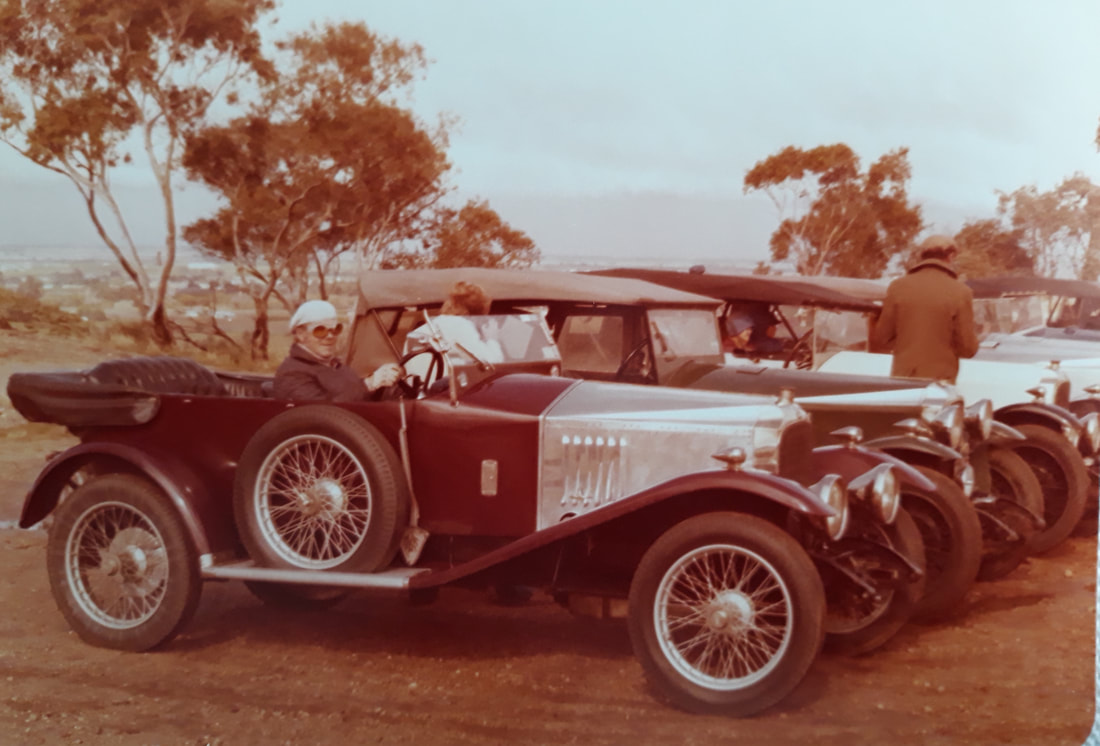
Mike Quartermaine, Hero of the 30-98
By Ian Cheese
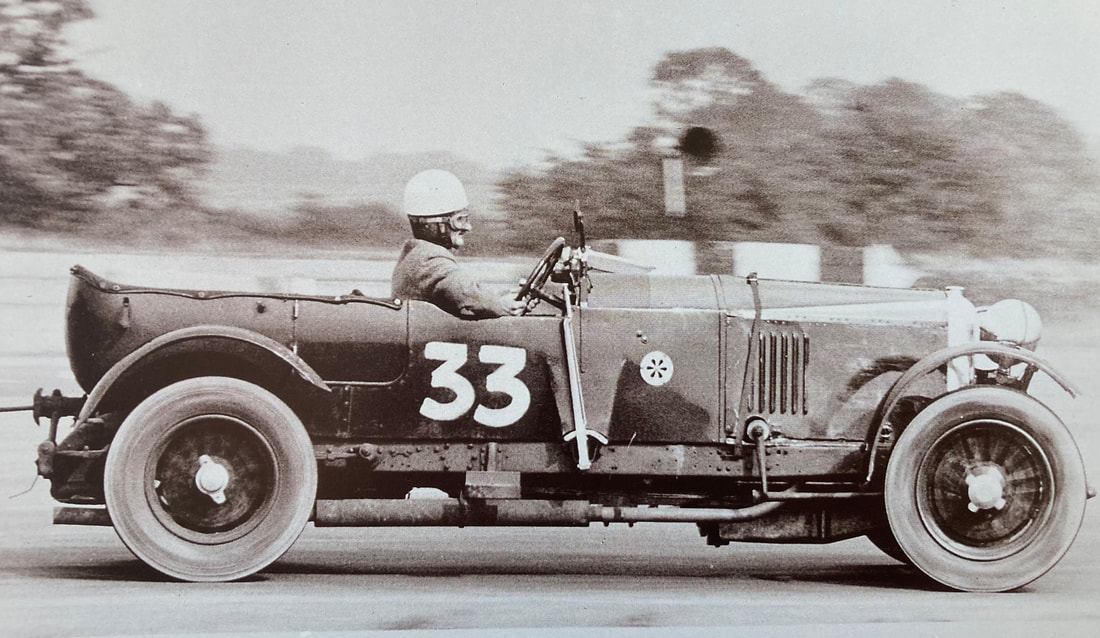
E286/OE222 - Mike Quartermaine. Snetterton 1956 (Photo: NWP archive)
Back in the early-80s I had the good fortune to meet a legend of the 30-98 world, Mike Quartermaine. He had bought his E/OE222 (YD 5735) when he was demobbed after the war and used it as his only car during his early married life with Ruth. They did at least one extensive tour of a still war-torn continental Europe. As time moved on and more modern cars arrived in the garage, Mike and the Vauxhall, always known as Salome, embarked on what became a long and successful motorsport career.
As the VSCC’s race, sprint and hillclimb programme evolved, Mike and Salome would there among the front runners as Mike started steadily developing the Vauxhall’s potential. At the bottom end, the crankshaft was replaced by a special light built-up version along with a lightweight flywheel incorporating a Bedford clutch. Aluminium ‘squish’ pistons and a high lift camshaft helped activity higher up and a huge downdraft SU, allegedly from an ERA blower, and a gas-flowed exhaust improved the breathing.. High ratio constant mesh gears raised the indirect gear ratios and endless strengthening of the torque arm ensured that all this power would reach the tarmac - and Mike always took full advantage of it on both road and track……
For many years I accompanied him to numerous VSCC meetings through the ‘80s and ‘90s. For example we were heading, as rapidly as ever, to Silverstone very early one Saturday morning when petrol started spraying out of the intake of that huge SU where it emerged from the top of the bonnet. We stopped in a pub car park to find that the float had sunk. Mike reckoned that, if we could restore its buoyancy, and he kept his foot hard down (no change there….) we could reach Silverstone and a soldering iron before it sank again. Lacking a saucepan and hot water for the traditional treatment, we lit a small fire using twigs from under the hedge. We then put the float onto a screwdriver and gently warmed it over the fire – like marshmallows on a BBQ. A nice little jet of flame soon showed a) where the leak was and b) that we were burning off the contents.
Eventually the flame went out but, seconds later, there was a bang like a rifle-shot and we were left with half a float on my screwdriver and the other half rolling down the road 30yds away. Pause for bad language and helpless laughter. When we had recovered our dignity, and both halves of the float, Mike announced that he had a spare one at home. Having jury-rigged a petrol pump switch so that I could switch off the pump whenever petrol sprayed my face, we set off – faster than ever. The car never missed a beat, and we were soon home. The spare turned out to be a carefully modified, and probably pre-war, Thermos cork which had been ‘on the shelf’ for many years. It fitted, it worked, and we reached Silverstone in time for scrutineering, two 5-lap handicaps and a brisk (of course) drive home.
Mike was an artist with solder and the following day the original float was repaired, refitted and, as far as I know, is still in the car.
When Mike retired, Ruth told him that she had married him for better, for worse but NOT for lunch so he should find something to fill his time. No more encouragement was needed and the ensuing 15-yrs were occupied by restoring or building 1x E-type (R4/E411 E-3098 now mine), 2x OEs for other people, 1x Edwardian A-type 2-seater, and 1x OE special, and not to mention a miniature of the E-type complete with ohv lawnmower engine and functioning gearbox. When he died in 2000 he was working on a Prince Henry Replica. I am privileged to have known him and worked with him on all these projects. Truly a remarkable man and a real 30-98 aficionado.
April '22
As the VSCC’s race, sprint and hillclimb programme evolved, Mike and Salome would there among the front runners as Mike started steadily developing the Vauxhall’s potential. At the bottom end, the crankshaft was replaced by a special light built-up version along with a lightweight flywheel incorporating a Bedford clutch. Aluminium ‘squish’ pistons and a high lift camshaft helped activity higher up and a huge downdraft SU, allegedly from an ERA blower, and a gas-flowed exhaust improved the breathing.. High ratio constant mesh gears raised the indirect gear ratios and endless strengthening of the torque arm ensured that all this power would reach the tarmac - and Mike always took full advantage of it on both road and track……
For many years I accompanied him to numerous VSCC meetings through the ‘80s and ‘90s. For example we were heading, as rapidly as ever, to Silverstone very early one Saturday morning when petrol started spraying out of the intake of that huge SU where it emerged from the top of the bonnet. We stopped in a pub car park to find that the float had sunk. Mike reckoned that, if we could restore its buoyancy, and he kept his foot hard down (no change there….) we could reach Silverstone and a soldering iron before it sank again. Lacking a saucepan and hot water for the traditional treatment, we lit a small fire using twigs from under the hedge. We then put the float onto a screwdriver and gently warmed it over the fire – like marshmallows on a BBQ. A nice little jet of flame soon showed a) where the leak was and b) that we were burning off the contents.
Eventually the flame went out but, seconds later, there was a bang like a rifle-shot and we were left with half a float on my screwdriver and the other half rolling down the road 30yds away. Pause for bad language and helpless laughter. When we had recovered our dignity, and both halves of the float, Mike announced that he had a spare one at home. Having jury-rigged a petrol pump switch so that I could switch off the pump whenever petrol sprayed my face, we set off – faster than ever. The car never missed a beat, and we were soon home. The spare turned out to be a carefully modified, and probably pre-war, Thermos cork which had been ‘on the shelf’ for many years. It fitted, it worked, and we reached Silverstone in time for scrutineering, two 5-lap handicaps and a brisk (of course) drive home.
Mike was an artist with solder and the following day the original float was repaired, refitted and, as far as I know, is still in the car.
When Mike retired, Ruth told him that she had married him for better, for worse but NOT for lunch so he should find something to fill his time. No more encouragement was needed and the ensuing 15-yrs were occupied by restoring or building 1x E-type (R4/E411 E-3098 now mine), 2x OEs for other people, 1x Edwardian A-type 2-seater, and 1x OE special, and not to mention a miniature of the E-type complete with ohv lawnmower engine and functioning gearbox. When he died in 2000 he was working on a Prince Henry Replica. I am privileged to have known him and worked with him on all these projects. Truly a remarkable man and a real 30-98 aficionado.
April '22
OE128 - A record!
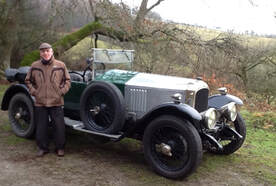
Congratulations Brian!
|
A small handful of 30-98s can lay claim to single family ownership for over 50 years. But only one has been in the same person's ownership for over half a century. OE128 has been owned by Brian Gray since his Cambridge undergrad days in 1959. Brian has raced, trialed, toured and hillclimbed his car, as well as rebuilding it at least once, and fettling it as required for 52 years.
The Register entry reads: Ownership history: Dr B Gray 1959 - ;J Barton-Hall 49-59; H G Parker 49; A W Kennard 32-33 |
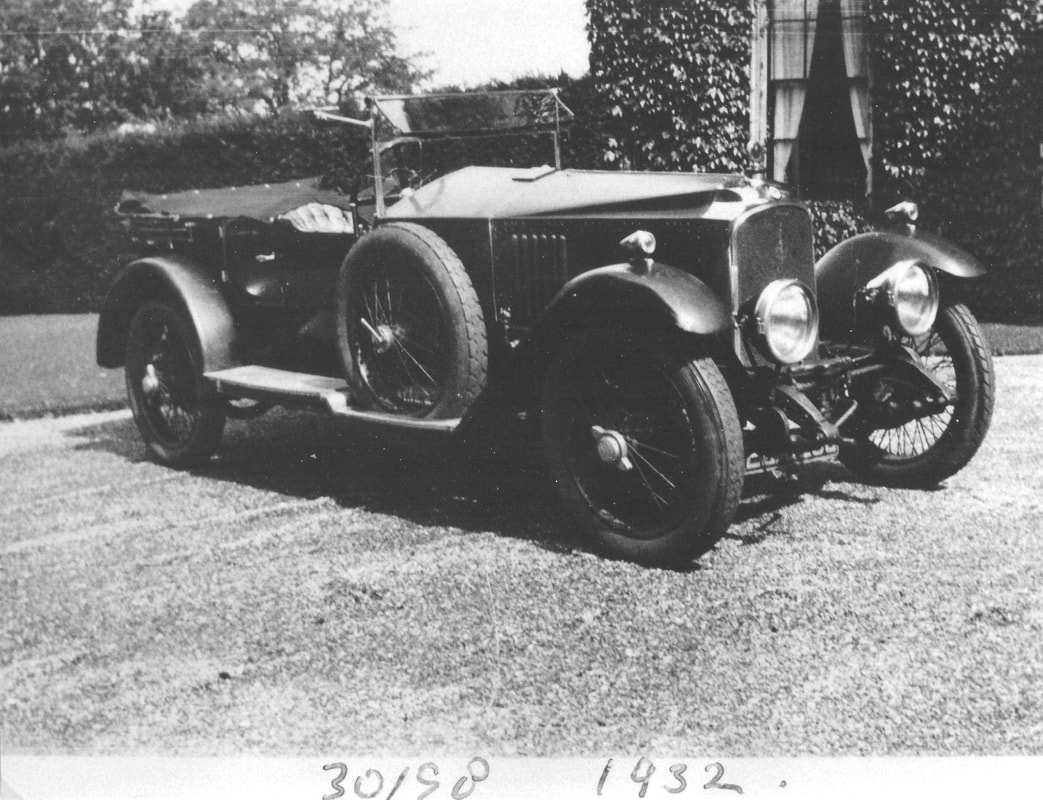
Norris Kennard 1932
|
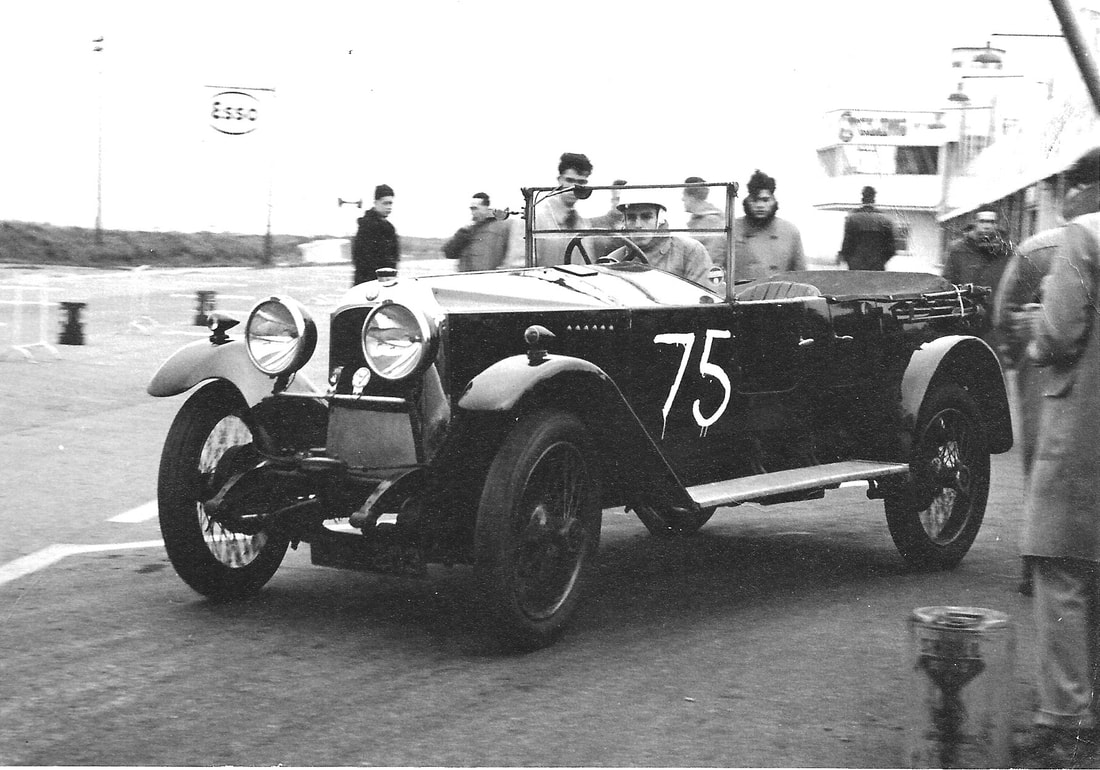
Snetterton 1960
|
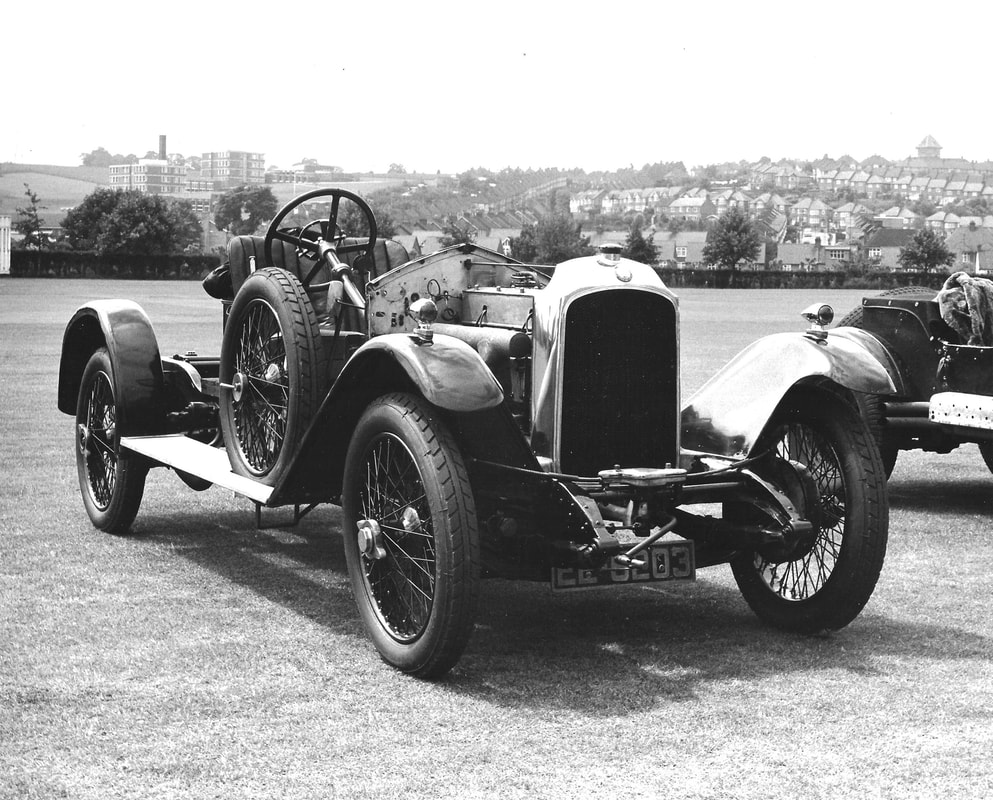
30-98 Register at Luton, 1972
|
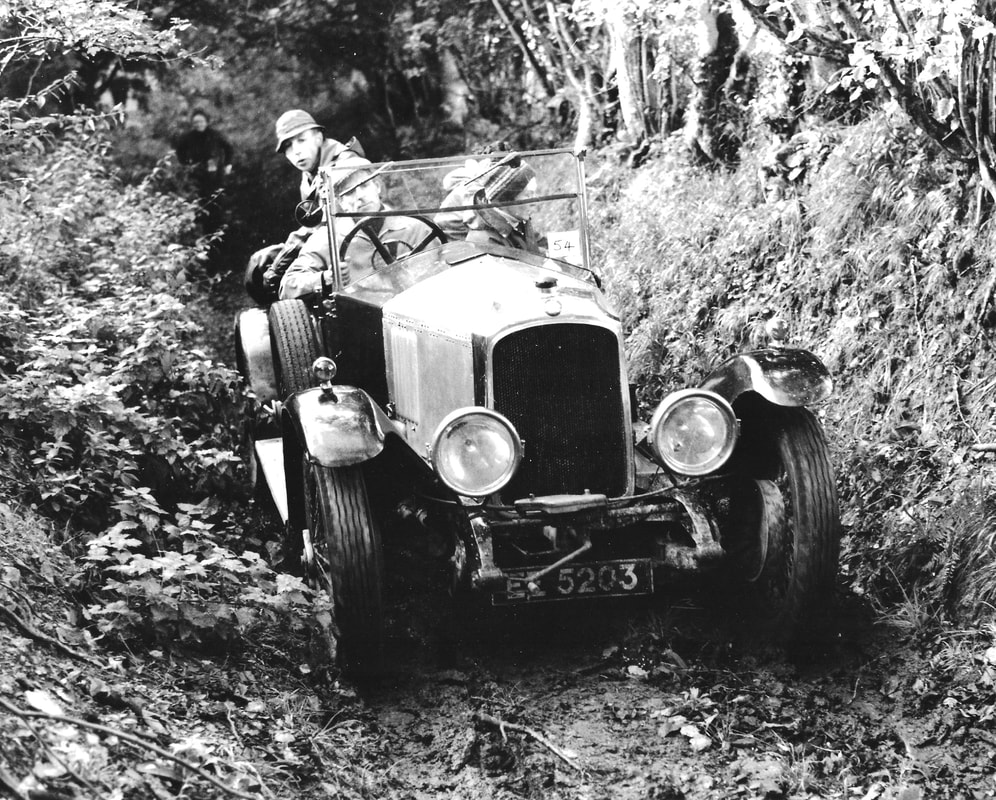
Trials!
|
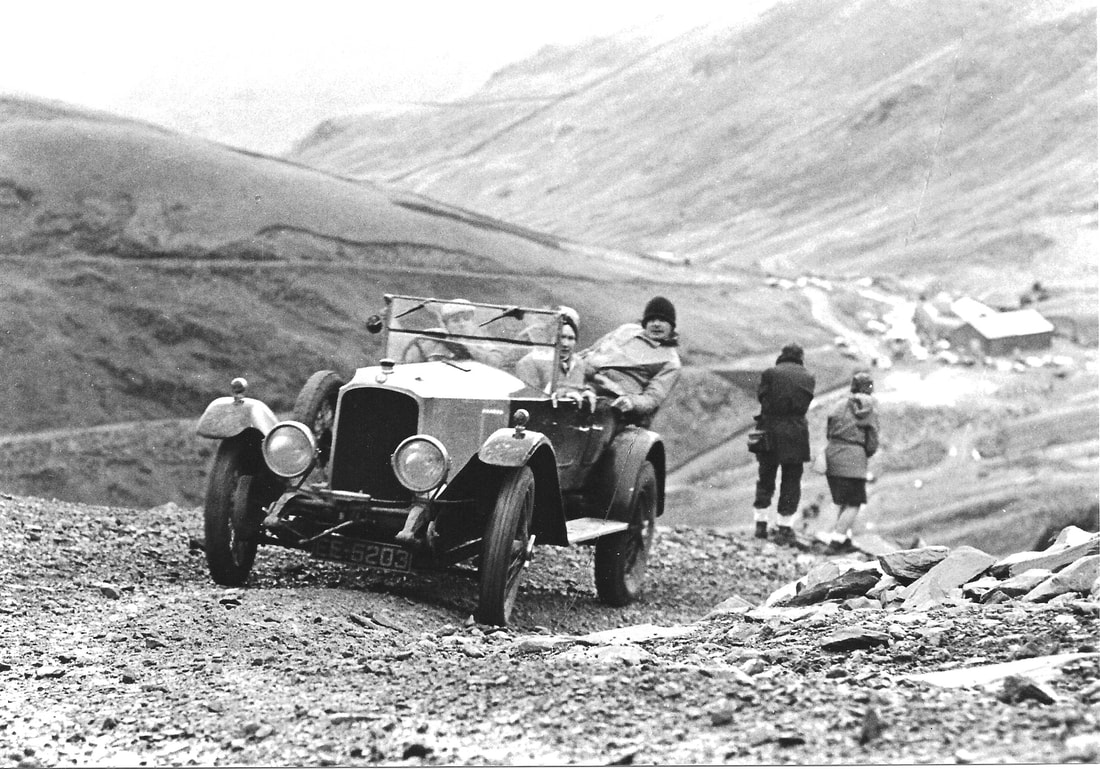
Drumhouse 1975
|
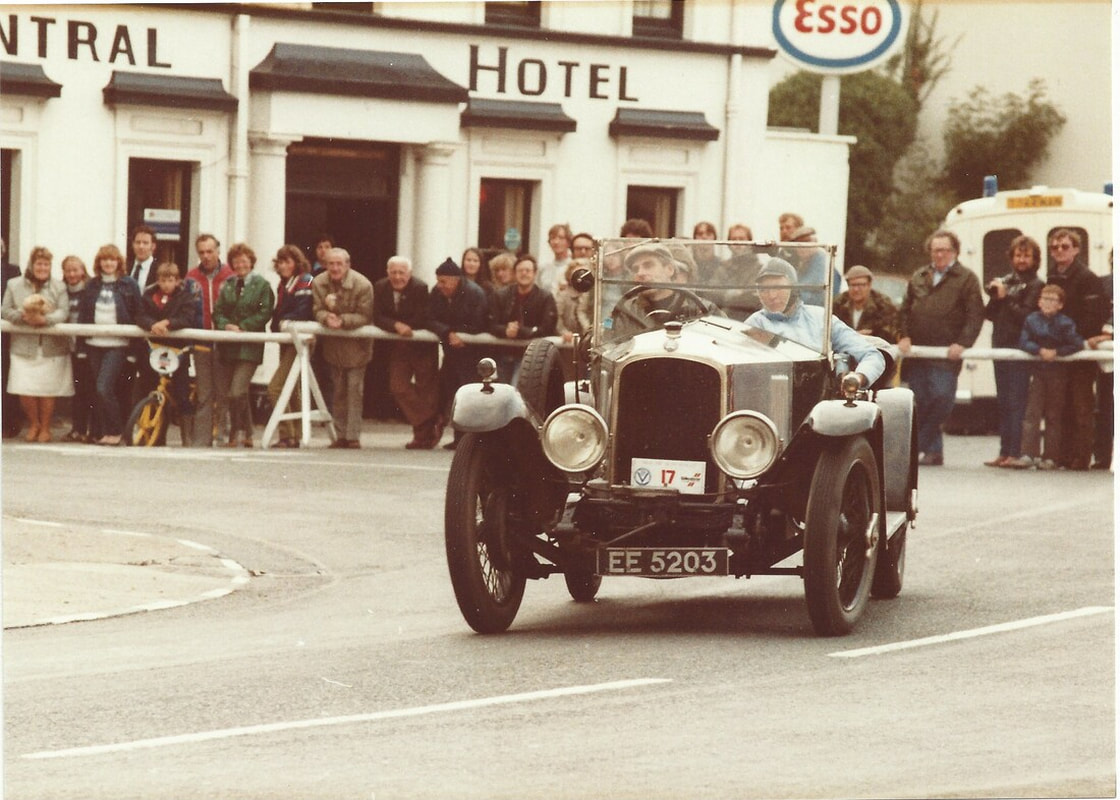
Isle of Man
|
The life and times of OE288
|
Rebodied as Derham two-seater in 1930s. S-type gearbox; hydraulic brakes and 3 piece wheels; was in USA for many years. Car restored in USA (Mi,Fl) by W H Lane in the 1960s & 1970s. With many thanks to Dave Lane who recently sent some of these images from his late grandfather William H Lane's files. . Most recently in Cumbria, UK.
Ownership history: B Williamson (UK) 1999 - : A G Newall 96-99 (UK); C Mallory (USA); W H Lane (USA); J Frost 77; R Garner-King (in UK until early '50s; R Heller 37 (USA) |
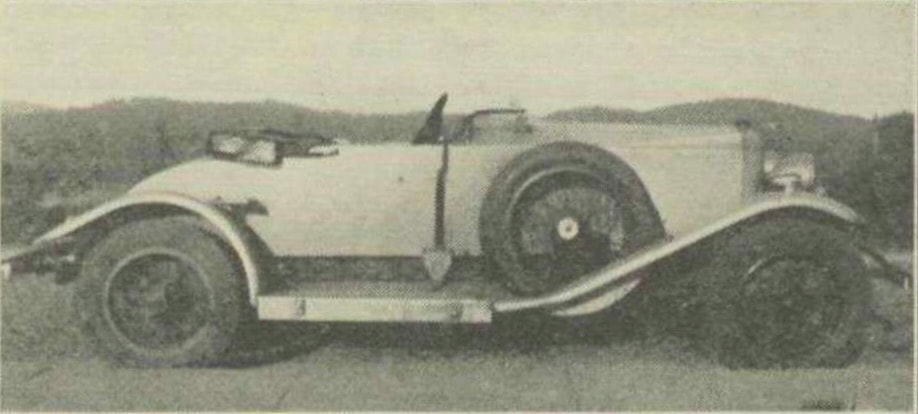
1937
|
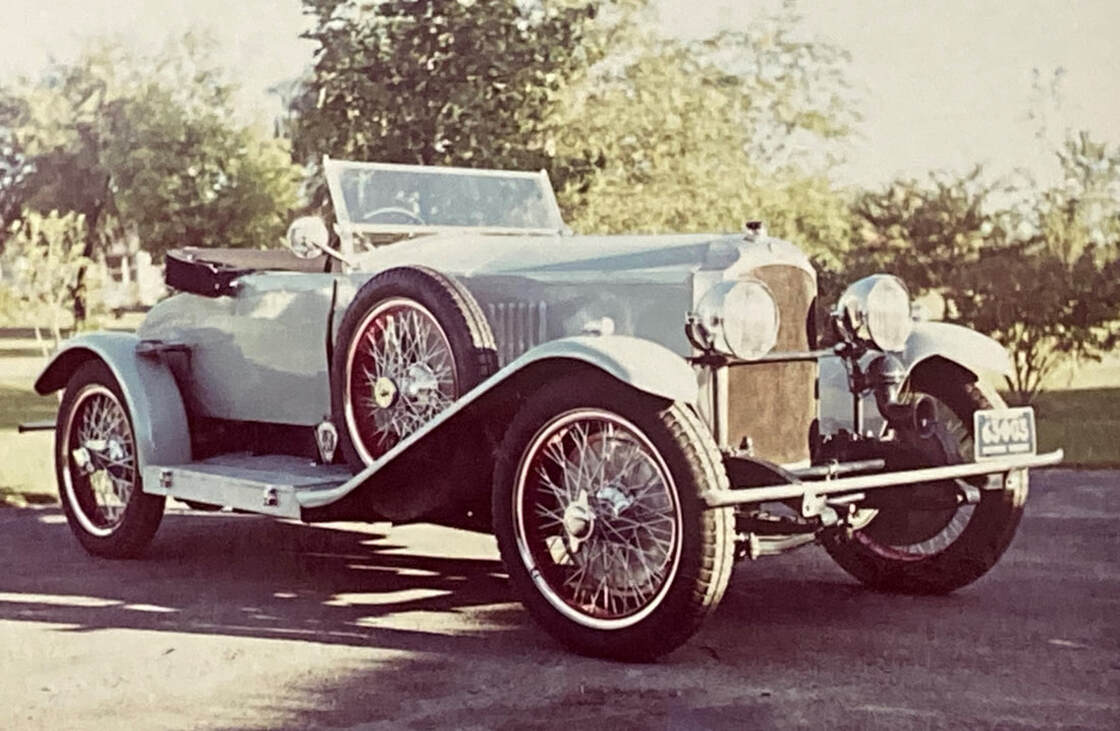
OE288 (1970s)
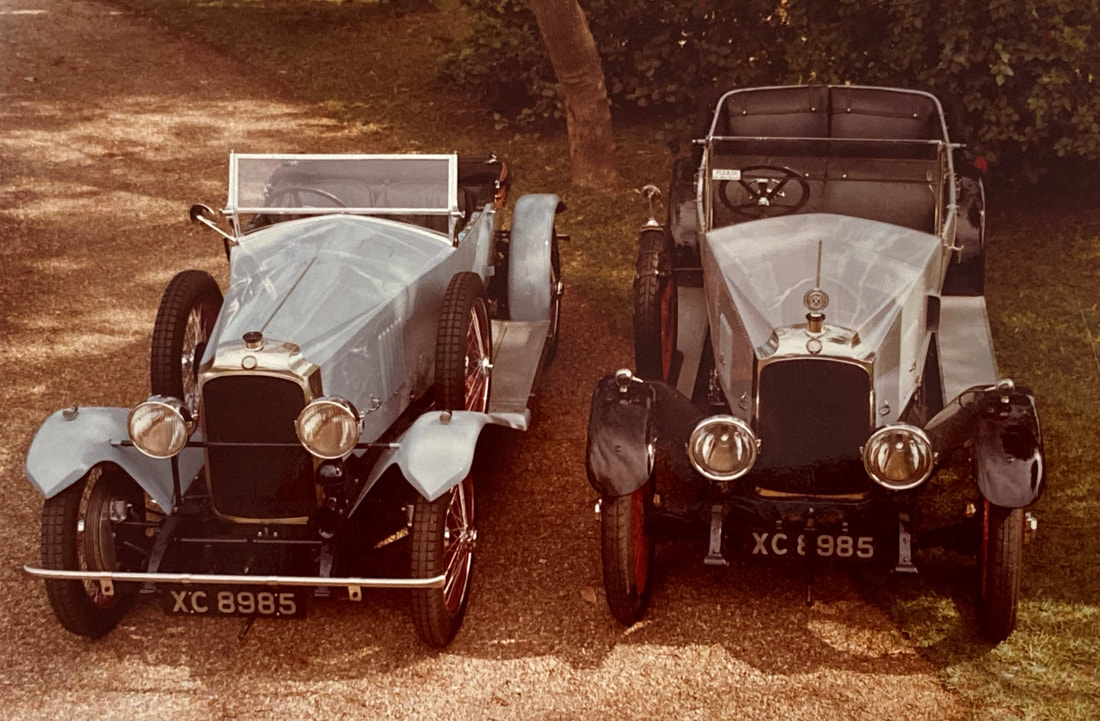


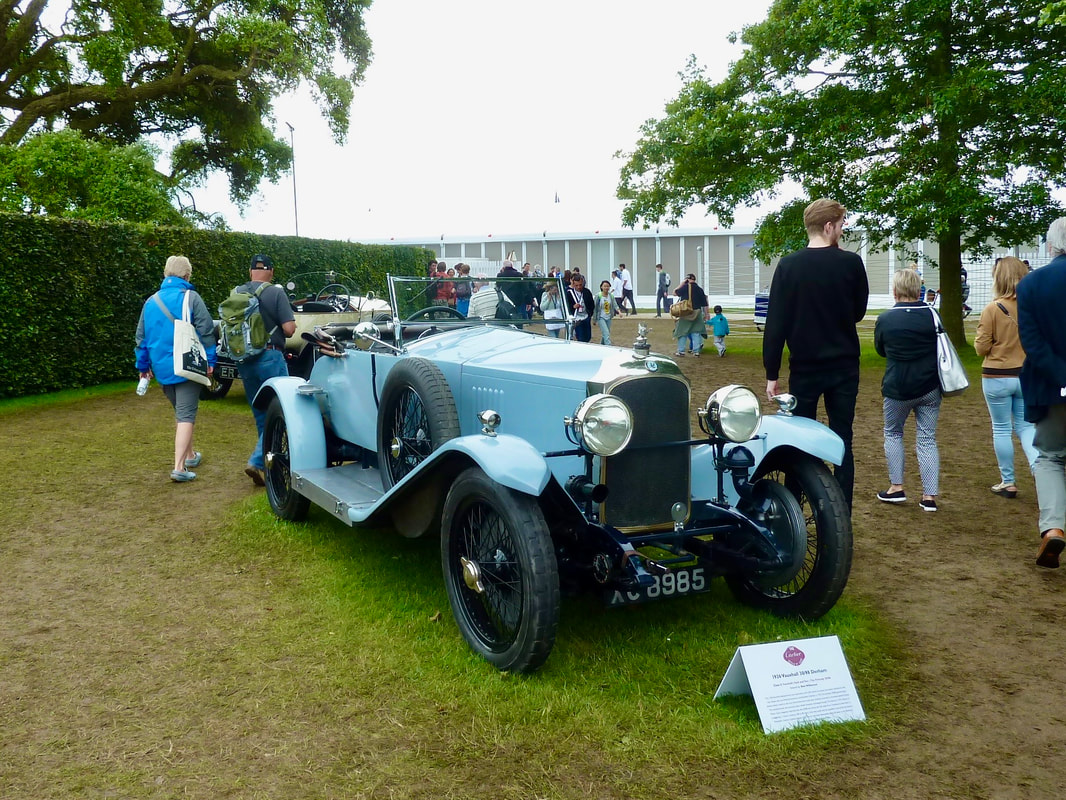
OE288 (Goodwood - 2016)
|
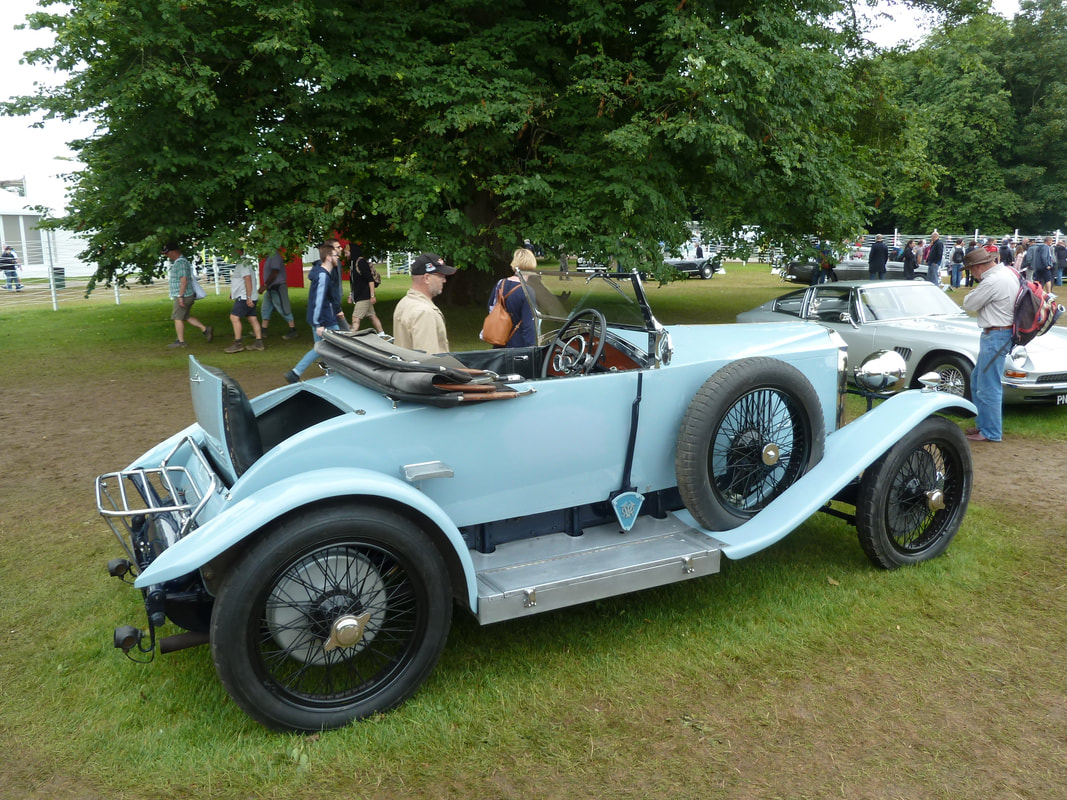
OE288 (Goodwood - 2016)
|
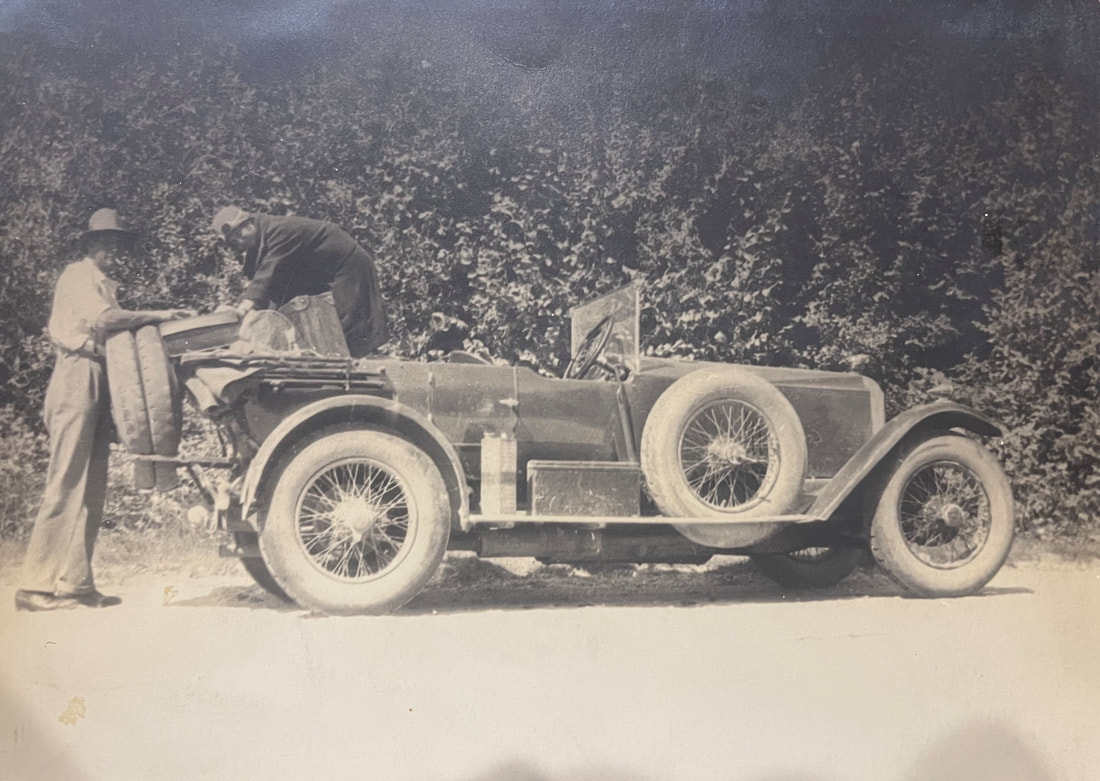
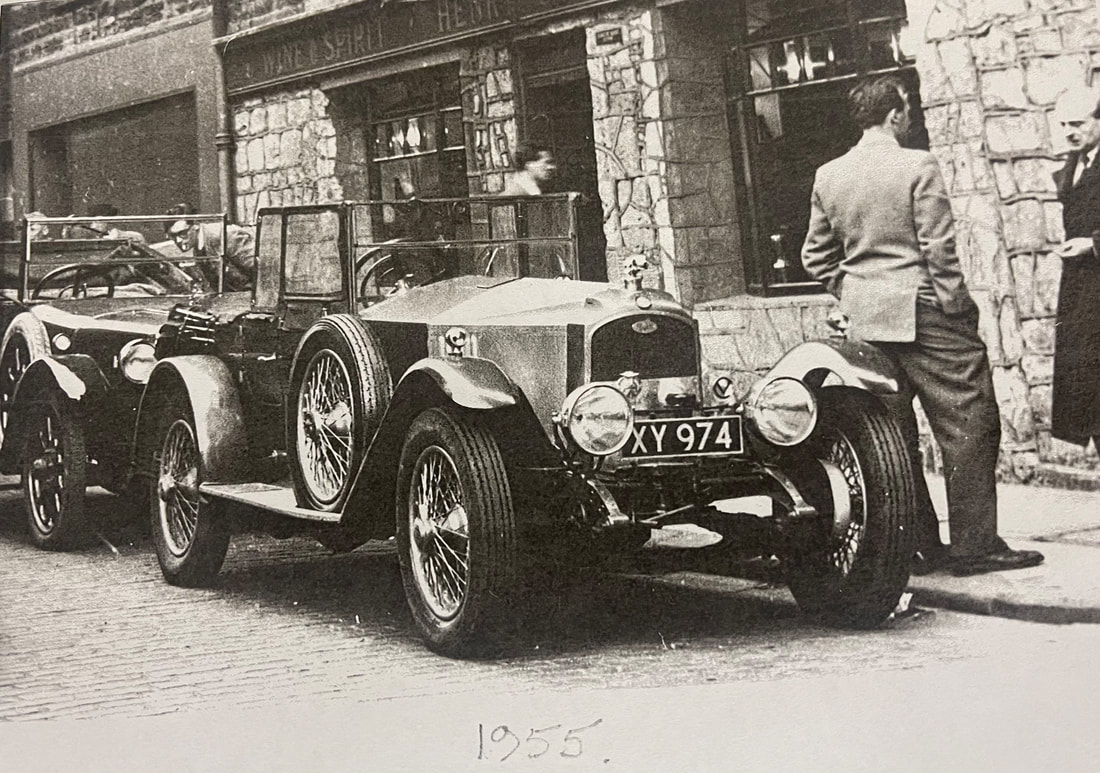
OE153 - period photos
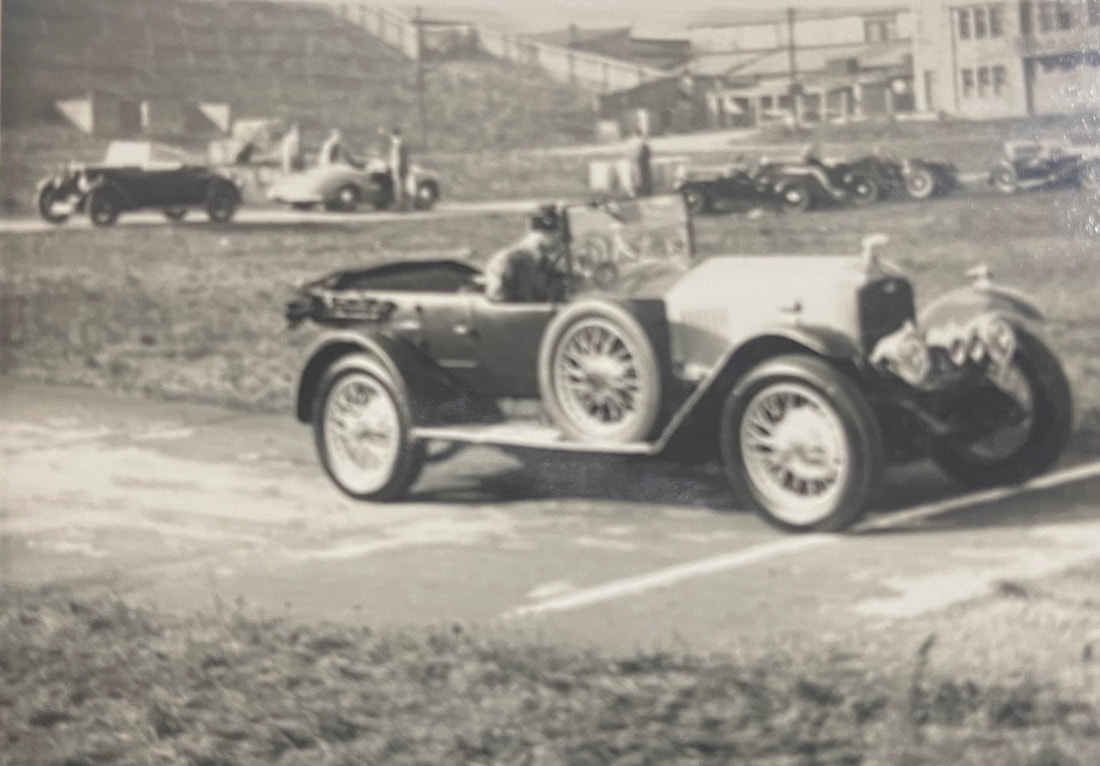
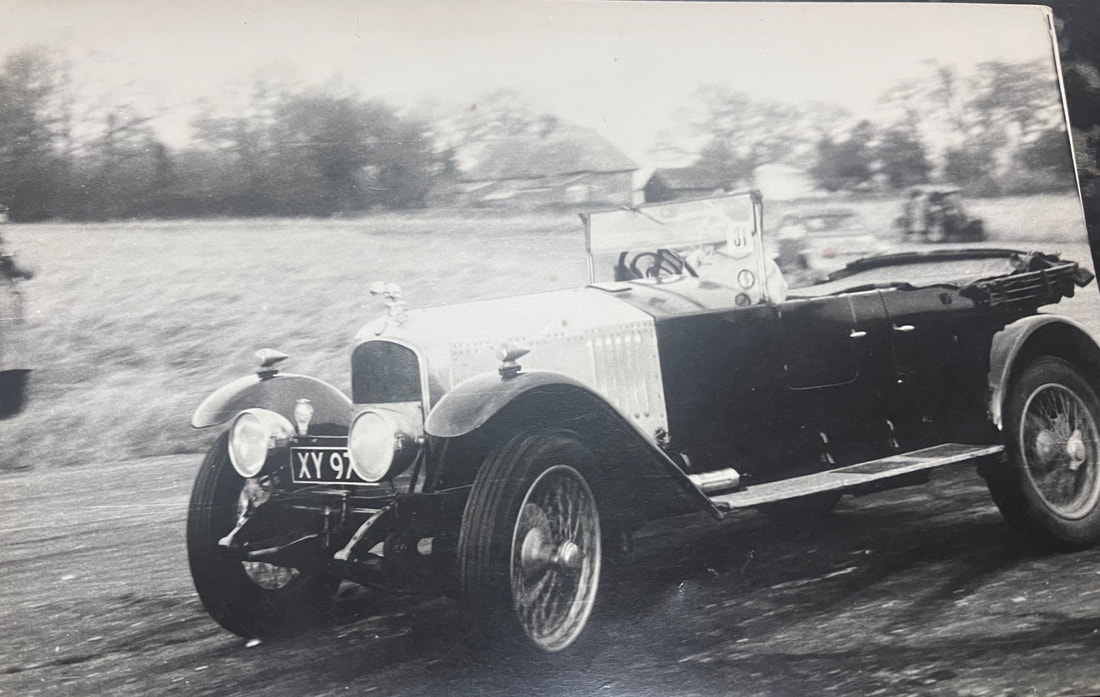
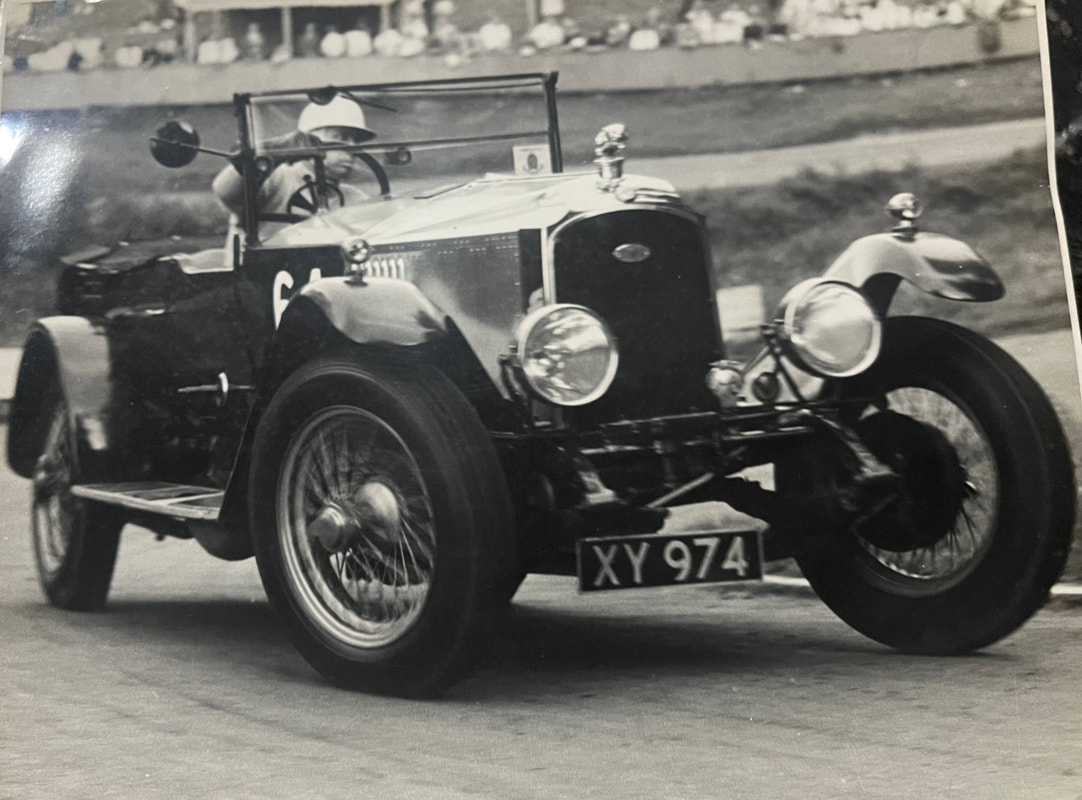
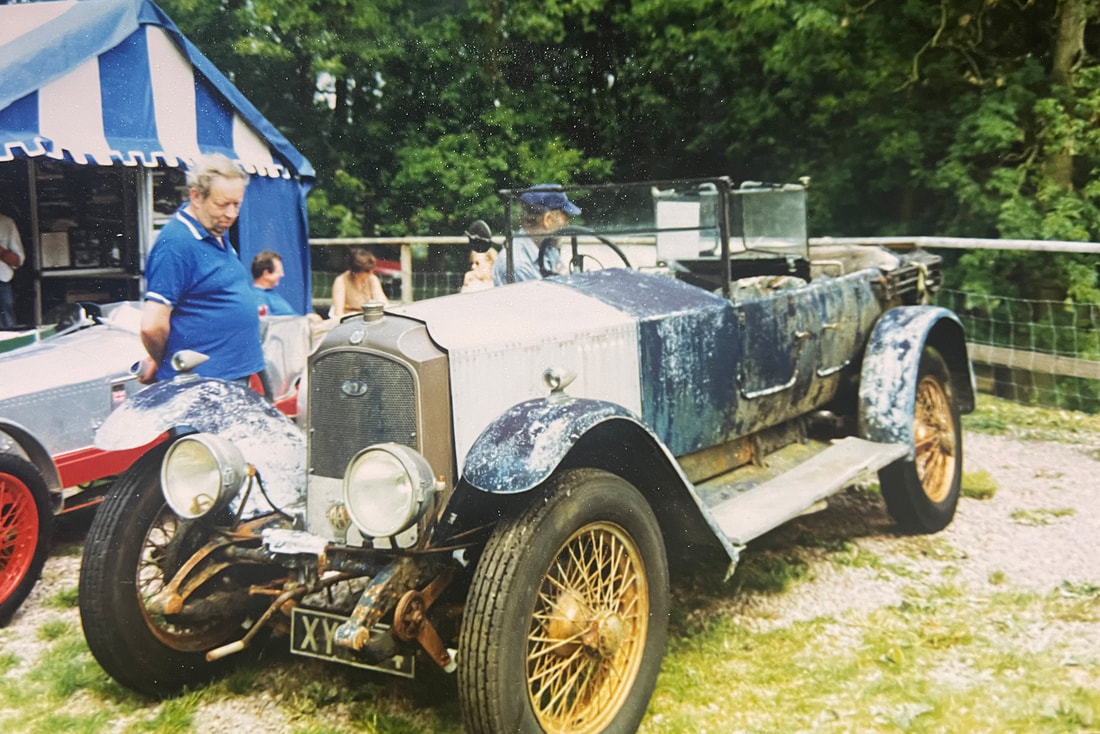
These superb period photos were kindly supplied by the new US owner of OE153, Chip Wright.
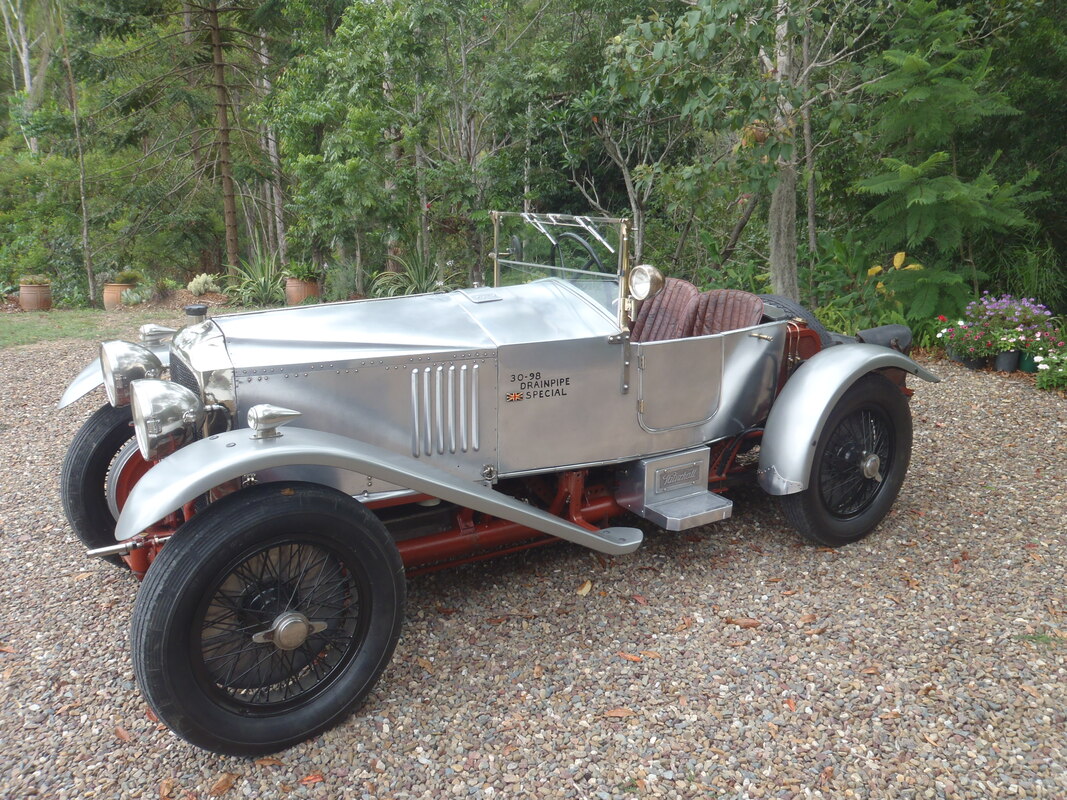
The story of the 'Drainpipe Special' (the short version)
|
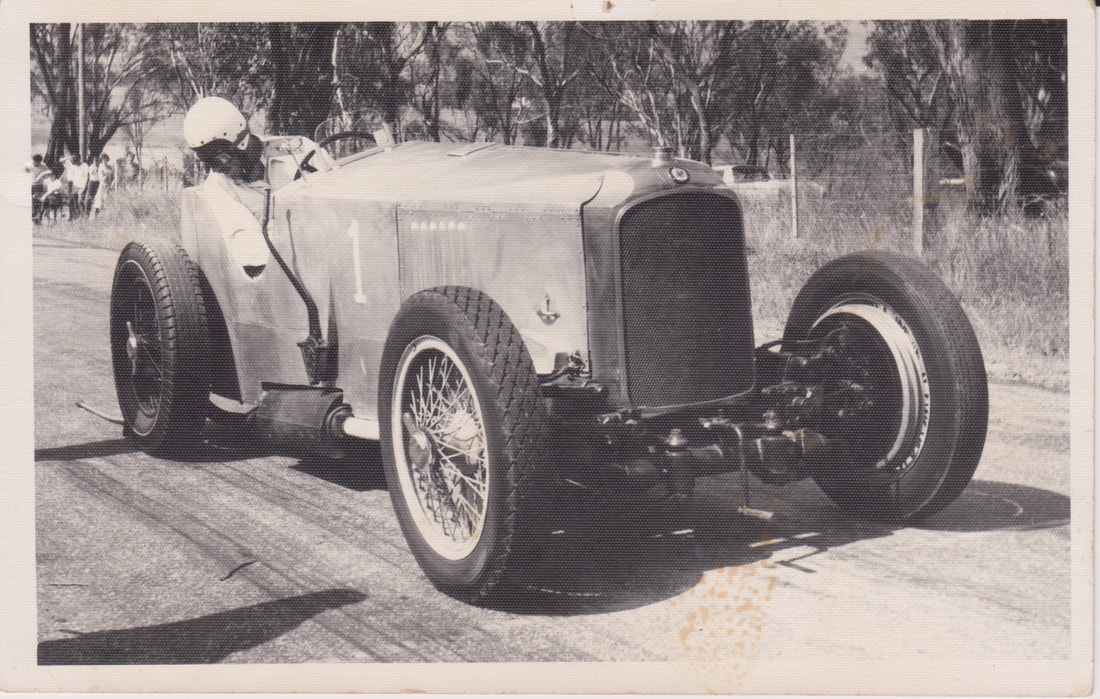
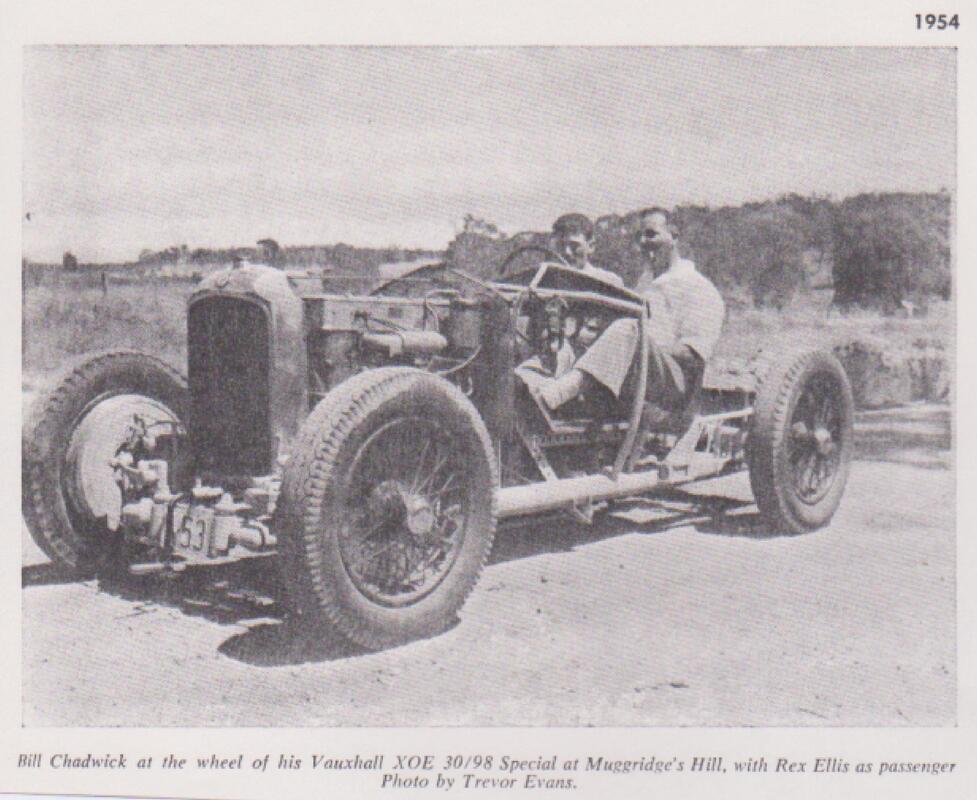
OE 221 started life in 1924 as a Velox bodied 30-98, owned by JJ Leahy, but was written off after crashing at the Bathurst Blayney Road. Bill Chadwick, a founder member of the VSCC of Australia & foundation President of the Bathurst Light Car Club, bought the remains & created the Drain Pipe Special. He built a new chassis along the lines of the Maybach special, and used the car in competition club events, hill climbs etc in the Bathurst area & Mount Panorama during the 1950s.
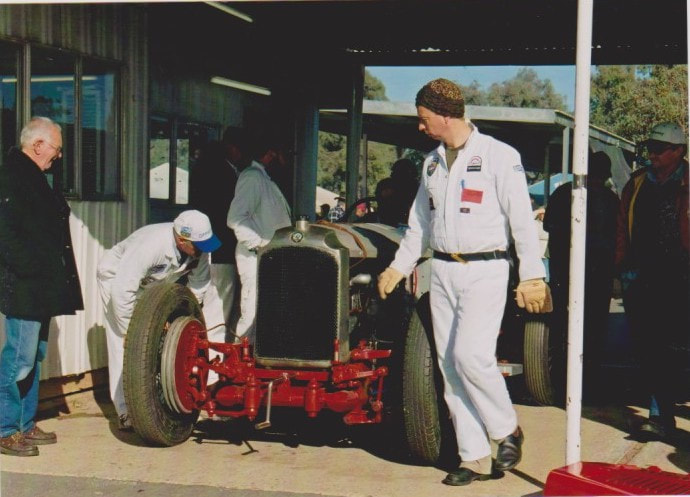
Jumbo Goddard, a well known competitor, persuaded Bill to sell him the car & later commissioned a change to a V8 Hispano Suiza aircraft engine to enable him to set a vintage speed record. Unfortunately, he died before it was finished. The remaining parts were bought by Fred Hemmings who rebuilt it back to its original Drain Pipe Special spec: 4 inch tubular chassis along the lines of the Maybach special with torsion bar front suspension & 1/4 elliptics on the rear. Crank case is a D type modified to 30-98 spec with 4 bolt centre main. Cylinder head, block, camshaft, followers, crankshaft, inlet manifold etc are all 30-98. 4 branch exhaust manifold as fitted by Bill Chadwick & lightened flywheel with Borg & Beck clutch. 30-98 handbrake now works on transmission. Gearbox fitted with high ratio constant mesh gears & rear axle is fitted 3.31 CW&P. Brakes are finned alloy Fiat 519. At present the car is converted to road use & used regularly. Anne and Richard Harris Feb'21 |
|